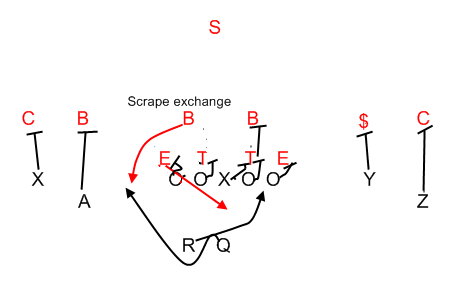
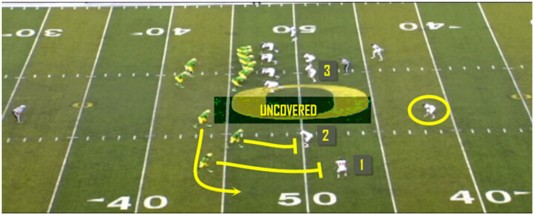
The more mathematical and precise the defense becomes in the reading area, the more difficult this "reading" becomes for the QB. You now have games like Scratch Exchange where DE collapses and LB fills the back. They have a more athletic wing that can force you to quit but can come back to play from behind. One option is to replace the read defender and the other option is to use additional defenders to change the block style . In this article, I'm going to talk about an alternative to the book and gun systems the mayor has used in Florida for some time.

book / bible outline
The Book is a game that uses TE/H-Back/FB to stamp the "Bible" as a relative spirit, reading the player (or in some rare cases, two defenders outside the red cannons). Although the bible looks like a divided area at first, the book starts behind the game to see the second level blocker pressure level and from there it folds to the second level.


The player who reads it always becomes the second DL at the end of the game (the head counts as the middle of the upper back). Depending on how the 3rd and 4th Defenders are in the line of defense, you can get BST #3 and TE #4, but they are rare.
This book project has several advantages:
- Arch obstruction can affect the expansion of DE. Most defenders play by the rules of ban and reduction . The presence of the TE arc outside of it often extends to them, with early lessons indicating that they are working towards this. This allows you to have 2 type of block with one TE, often removing DE from the game and preventing the linebacker from coming back.
- When teams work with cannons including scrap changes and other plays (which can cause DE to crash), this makes reading the QB easier. So the defense wants to use another DE defender to save QB and now that defender is blocked and if QB stops hitting DE hits RB and is removed from the game.
- Like the previous two points: This increases the risk of QB escaping since they now have a blocker on their heads. This can sometimes change the defensive area and prevent 3rd level defenders from penetrating the Arab defences. This way you distribute the protective snap of the post.
The Bible, like the book in its final form, focuses differently on defense because it initially resembles a divided territory. Hence the following DEK Bible forces the following to follow the rules of prohibition and etiquette to avoid being "caught". This "scriptural" aspect will encourage DE to work behind the game, especially against groups that favor "false targets" (discussed in the ban link). However, if he pushes too hard behind the game, the TE can get close to the second line of defense and help the QB deal with the operation.
Examples of books
This is the book's primary challenge. Here the TE will fall from the DE (keep sliding from the inside rather than attacking from the top of the hill) and immediately block the NB from the outside. This allows BST to immediately act on the back side of the ILB and focus on that block, a clearer flight from the QB's final region.

Here is an example of a 'Double Book' where there is a TE/Wing combination on the back Each of the two 'Book' blocks move behind TE#3 and the wing returns to the second level allowing the DE to jump inwards.

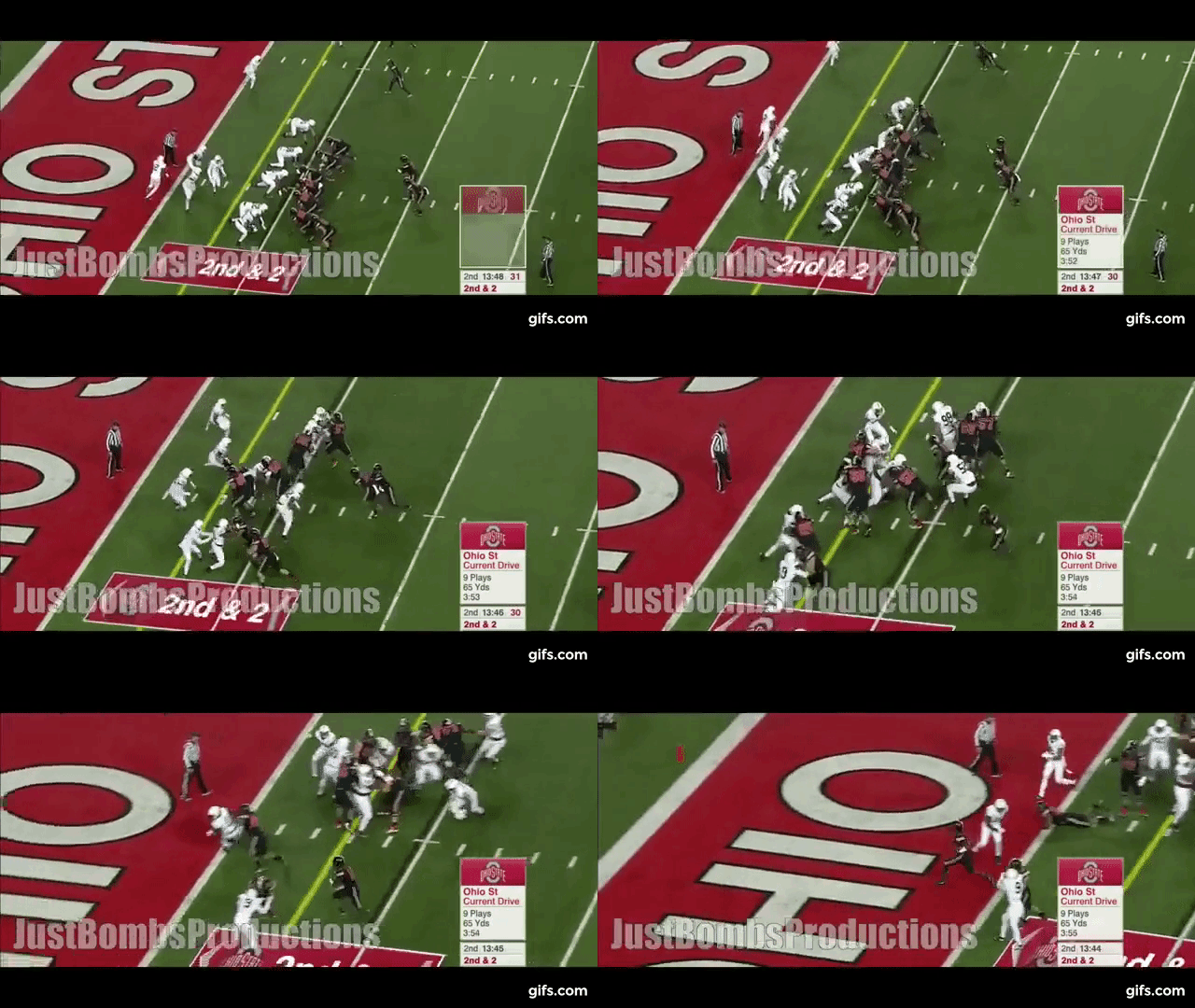
Here you really get two skins. This is an example of a 'Bible' invocation, but it also includes an example of a 'loop' invocation (see next section) where the BST falls first and then goes back to the second level to affect the DE. In this case, DE flies behind RB as he must be part of the wing. However, both outside players are blocked by the "Loop" and "Bible" blocks.


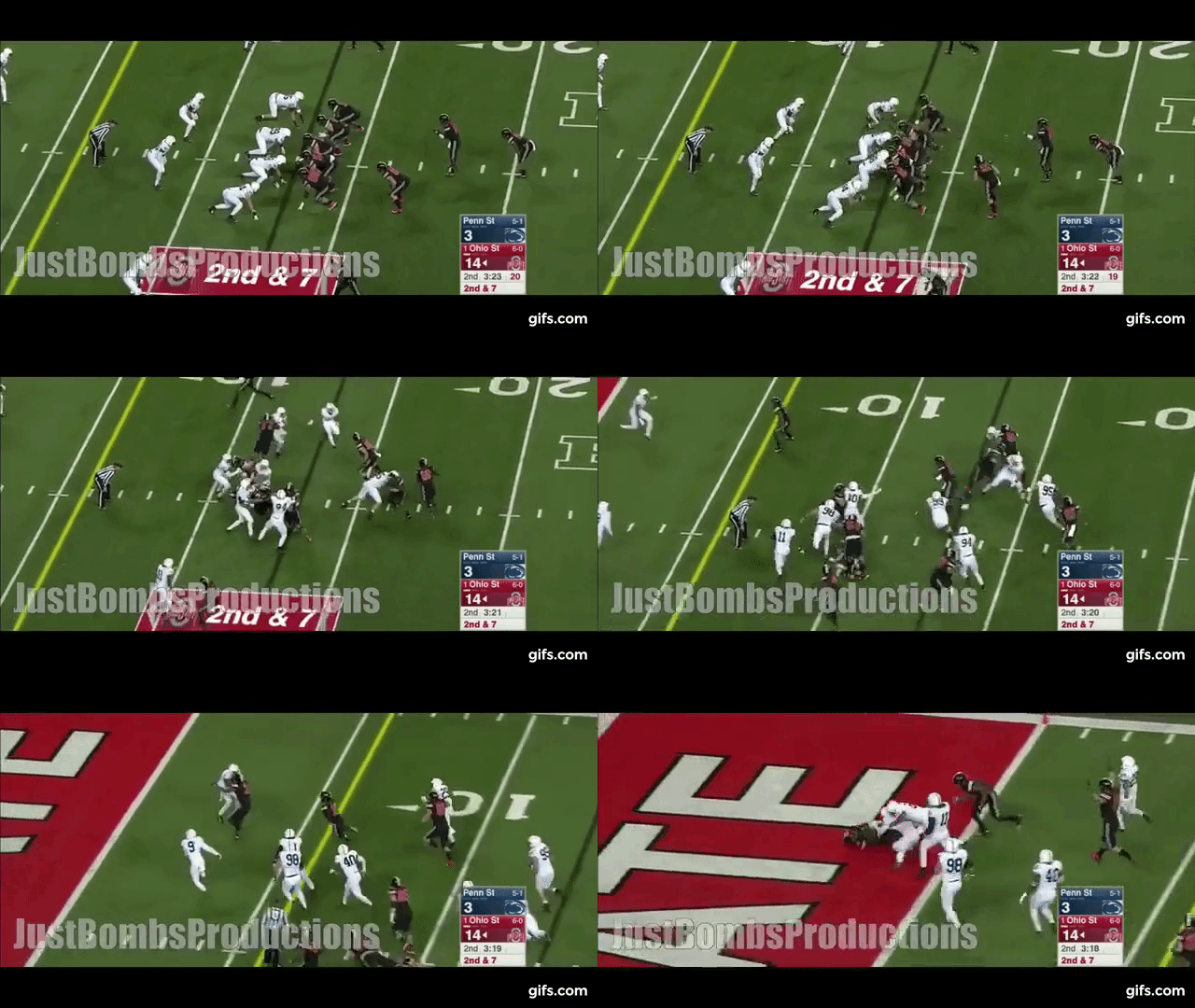
Gun
The rifle is actually the same concept as the "Book" but not with the TE/H-Back/FB but with the BST. It can be used as an online appeal against a specific image or as a game challenge like drawing a book. Depending on the defensive structure, BST will either come in early (to close a direct free throw from DE) or act immediately as a defender. He can eliminate the third defender ("gun") or "repeat" at the second level.

Examples of guns
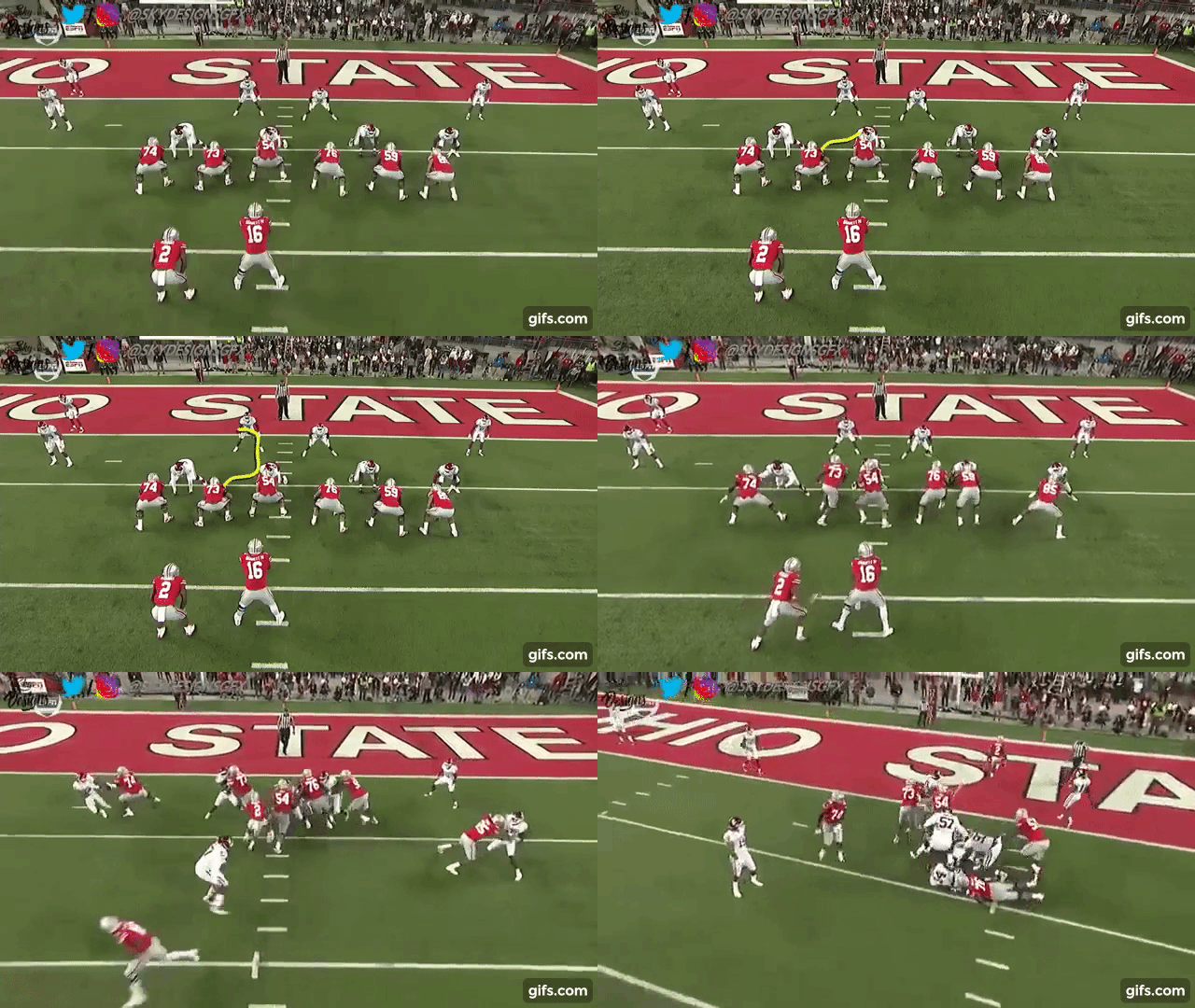
OSU vs. Oklahoma, the "gun" with which the BST was originally drawn, escaped. DE tries to attack, loses balance and escapes from the game. Banning more sports OLBs brings him to the end of the game and drops the RB TD with ease.

And from the last area, look at the good angle of BSG vs. LB without even thinking about DE help.

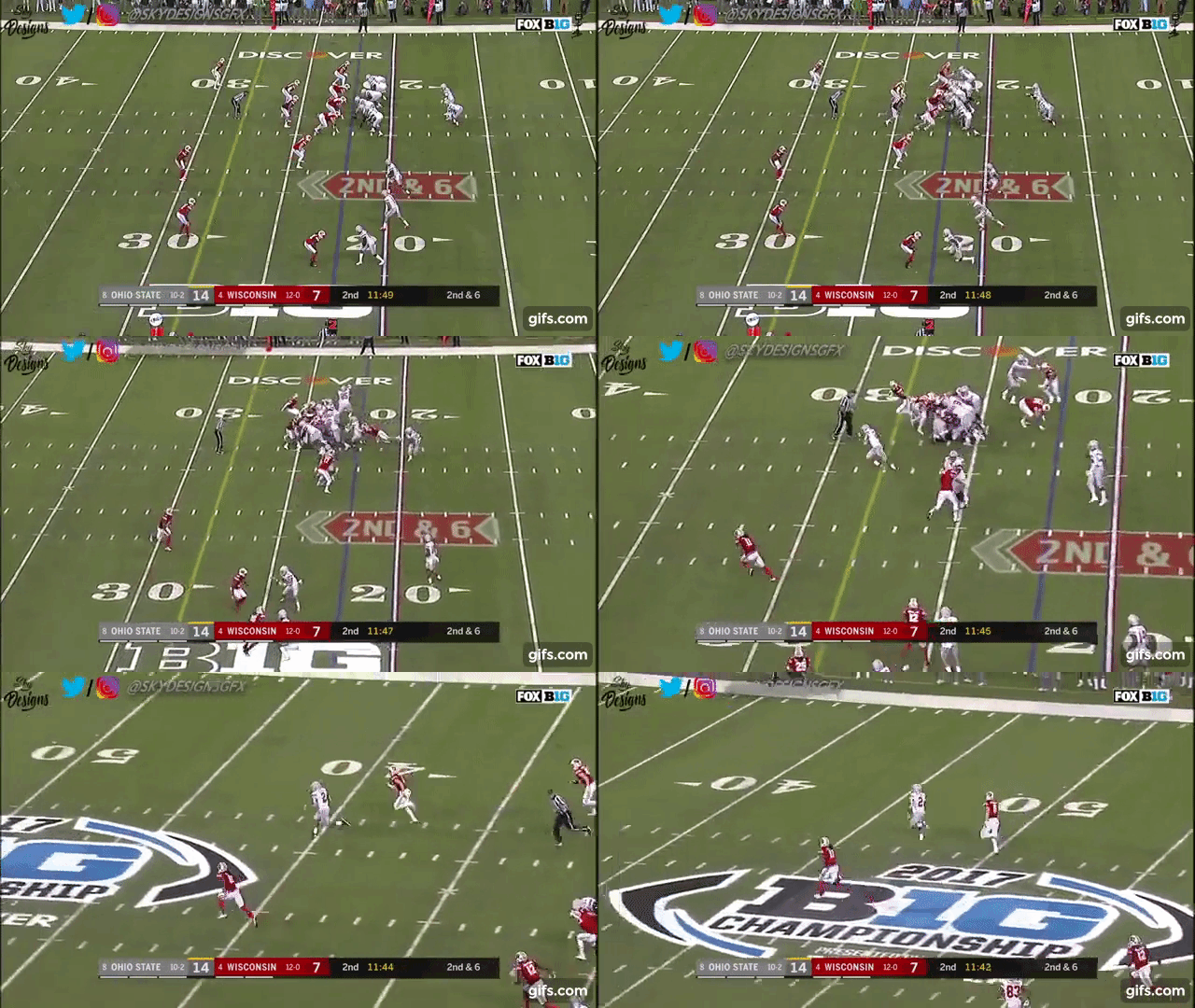
Same goes for Wisconsin in the Big Ten Championship play. DE attacks from the top of the hill and doesn't spin fast enough to drop RB down.
Here's what you can do to "save" later in the same game: LINK

Same goes for Wisconsin in the Big Ten Championship play. DE attacks from the top of the hill and doesn't spin fast enough to drop RB down.
Here's what you can do to "save" later in the same game: LINK
Bull / Chute RPO
Finally, let's explore a similar concept, but for now replace the back block with a pivot path. I would like to start by saying that I am very skeptical about this RPO. The angle of this shot forces him to have high accuracy in the movement position (not just over the shoulder and off the body), often with an unstable arm position (handling the ball is the basis of the throw in time). Likewise, clumsy corner catchers (effectively avoiding QB) can be hard to grip, a track and transmission who have little time to adjust their hands while the ball is in the air. However, as we've seen from OSU, PSU, and Oklahoma, they can easily be seen as every team used them very effectively in 2017.
Again, there are two different examples: an arrow screen that acts as a "book" to "block" the rear defender from this direction; The "waterfall" initially appears as a split zone but has the same effect on defence.


Here you can see that RPO's stock allows RB to fall back, completely removing the guns from wholesale.
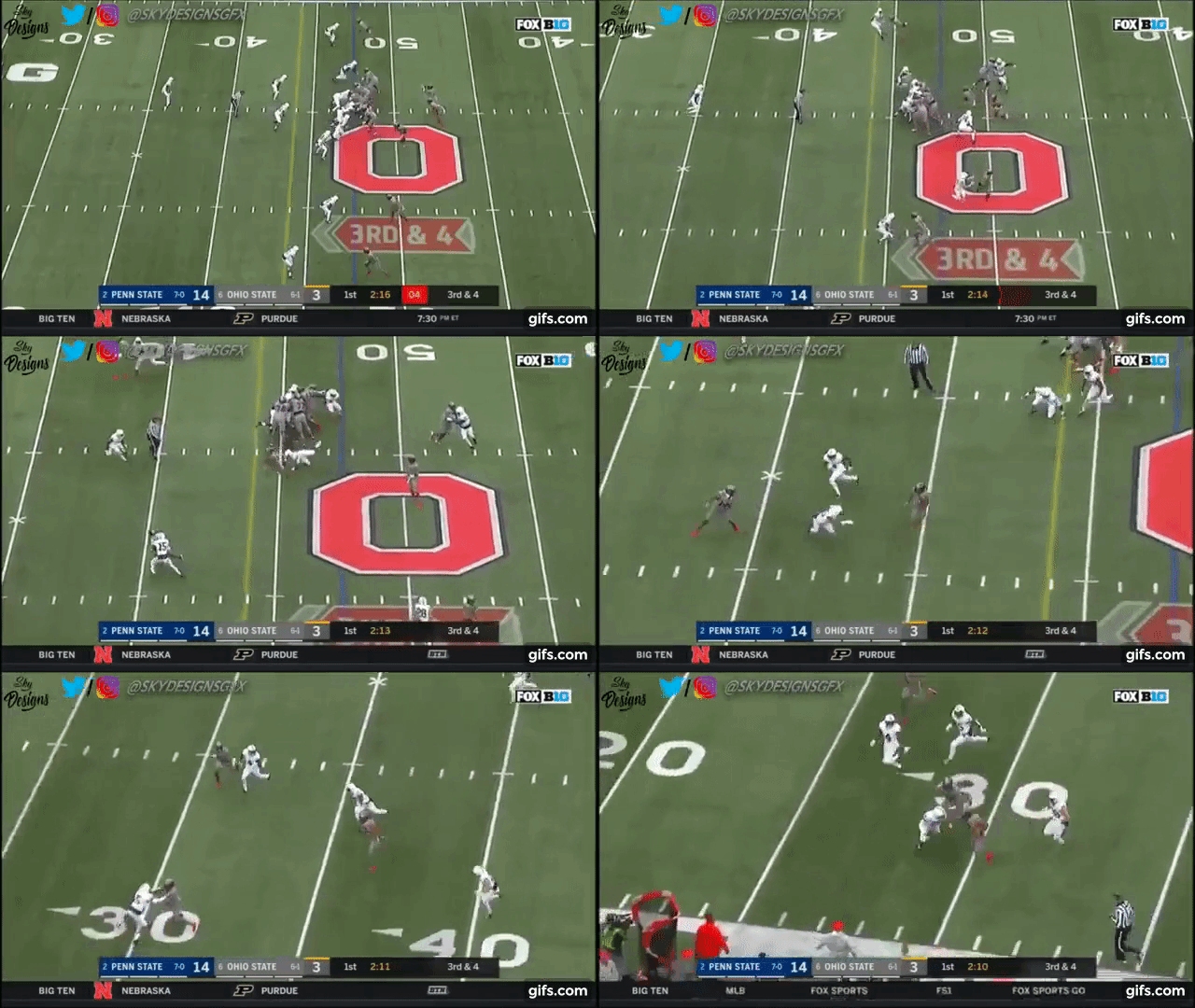
Finally, let's explore a similar concept, but for now replace the back block with a pivot path. I would like to start by saying that I am very skeptical about this RPO. The angle of this shot forces him to have high accuracy in the movement position (not just over the shoulder and off the body), often with an unstable arm position (handling the ball is the basis of the throw in time). Likewise, clumsy corner catchers (effectively avoiding QB) can be hard to grip, a track and transmission who have little time to adjust their hands while the ball is in the air. However, as we've seen from OSU, PSU, and Oklahoma, they can easily be seen as every team used them very effectively in 2017.
Again, there are two different examples: an arrow screen that acts as a "book" to "block" the rear defender from this direction; The "waterfall" initially appears as a split zone but has the same effect on defence.


Here you can see that RPO's stock allows RB to fall back, completely removing the guns from wholesale.
Here's the RPO chip. In this case, the OSU uses the movement of the socket. And the poor army doesn't know what to do here (check the security on the side of the game so they don't escape).
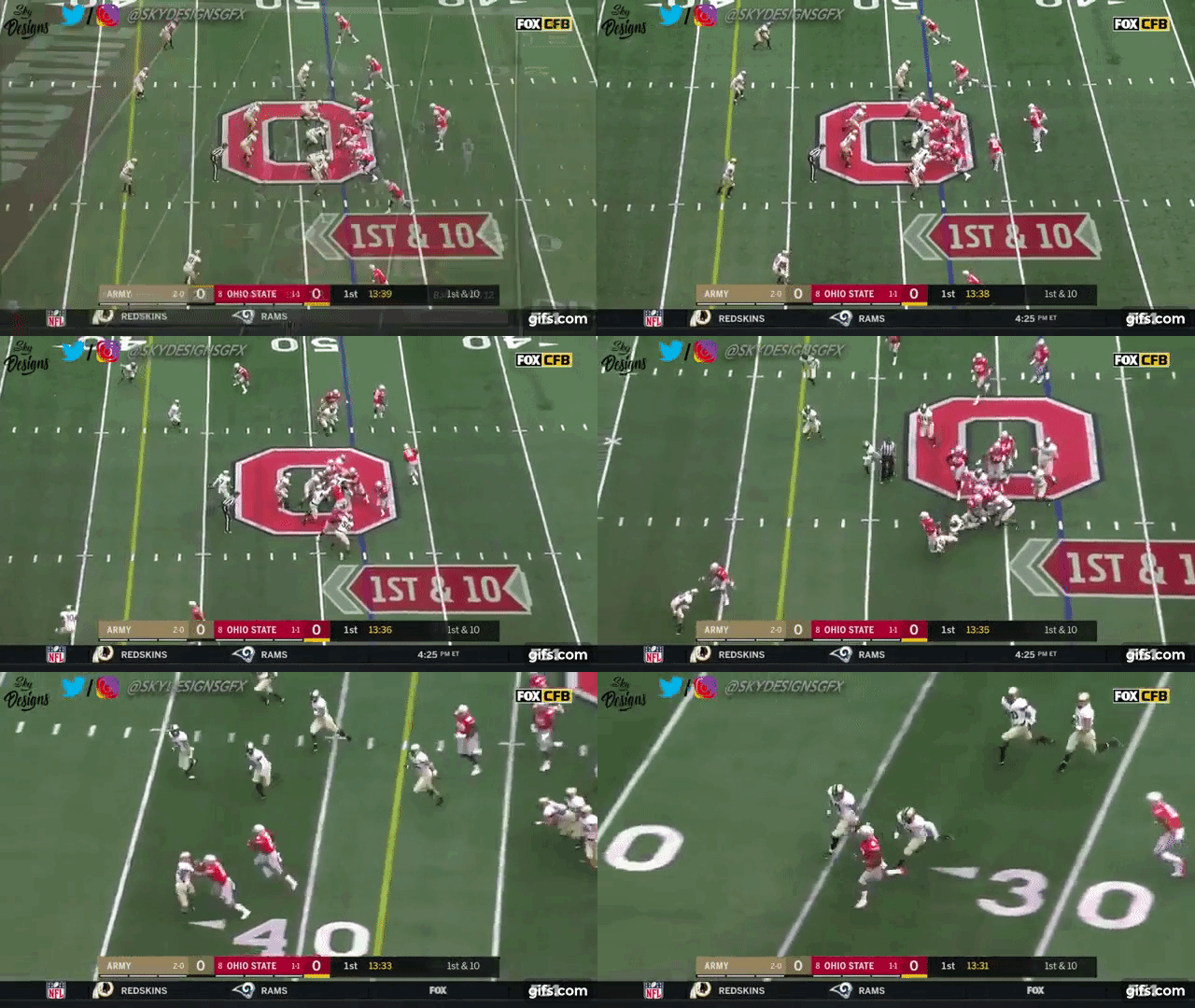
I'm hesitant to mention that the power supply uses the same circuit that I've used more than anyone else in the last year.
2x2 center form of PSU. Built-in area + sliding screen #RPO . DE crashes into RB and then pulls up the sliding QB screen for a good 1st win and H goes off pic.twitter.com/ie5Bjqu6y4- icoachtowin (@1coachtow1n) July 23, 2018