Originally published by Maize n Brew on May 29, 2014
Related Press:
Minnesota is one of the most popular teams not only in B1G, but in all of college football. Not only are they tough when it comes to how well they manage their football, but they are also the core of a team that wants to be strong runners. Most of their runs are between dives, like the inner belt from Power O to RB or Power O QB. With such strength on the field, there is no speed to threaten the team. So the way to take their football to the extreme is not to switch others or activate the WR screen, but to use WR in a different way to activate the whip. Not only did humiliation become commonplace to them, but they used it to make another escape. In this article, we'll take a quick look at the main Golden Gophers games and take a closer look at how they work with the rest of the gamebook.
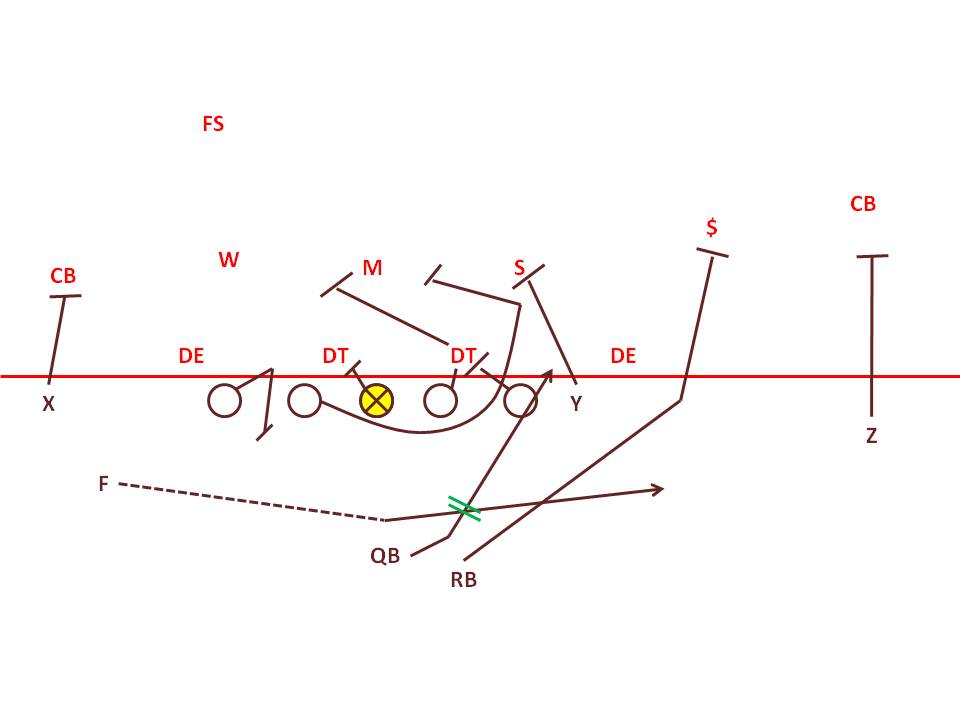
On power: The main form of the Golden Gophers is the traditional Power O game, but rather than being annoying, Minnesota often takes it with a shotgun or shotgun. They will also use different versions of Power O such as One-Back Power, Two-Back Power QB Power. The blocking model is more or less the same for each of these games, the difference is usually in the background.
For example, there is back strength here.
Compared to the power of two rounds.
Note that the difference is that the blocking power in Power with one defender will be TE online, not RB. Now they are using the power of QB here.
Notice how CB does the initial calculations. This allows RB to take the lead, acting as a blocking leader, as well as allowing drawn OG to hit the hole in front of GB.
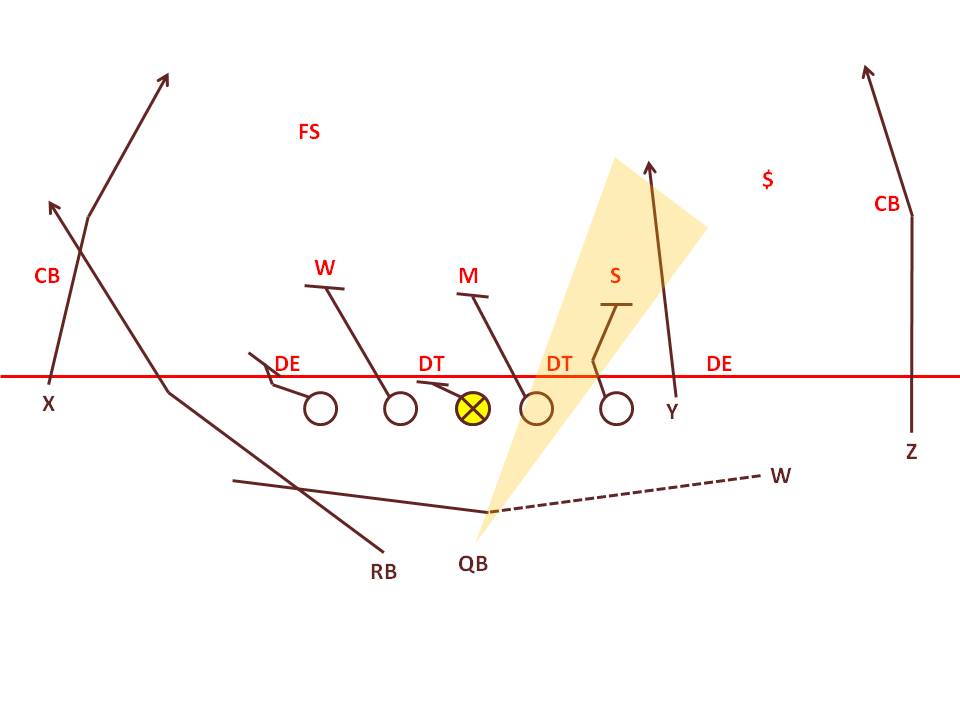
Read the inner rope The deep zone is a key element of Gopher's attacks. It works well when combined with power, but also attacks when dropped. In this case, Minnesota usually associates it with the QB reading.
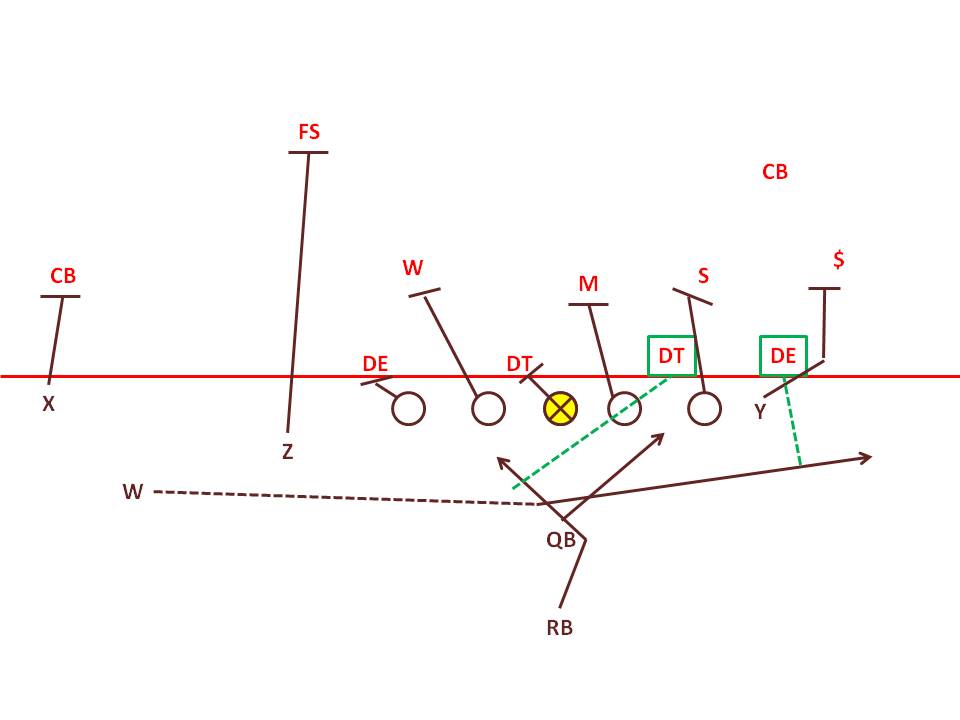
One of the things that Minnesota has done for mobile QB is to run a game similar to a reading game, but instead of cutting FB, it tends to bend blocks to the second level.
At first glance, it looks like an inner circle for all intents and purposes. However, to prevent the QB from escaping, the DE is taught to push the inner belt while maintaining its limits. When FB accepts the remaining angle with inclusion, it essentially closes the section with DE, which is very active inside, isolating the second tier inside the QB. This is a great way to fight DE-sent discounts and LB-sent "for DE-traders" discounts. Both players are now out of the game, which is why Minnesota was so successful last year.
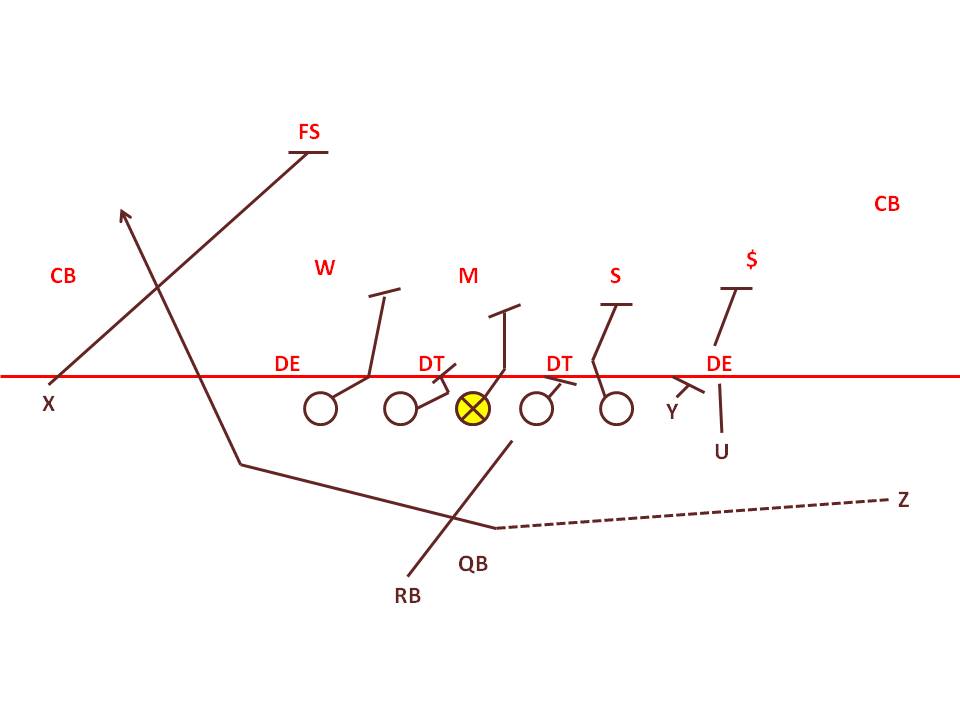
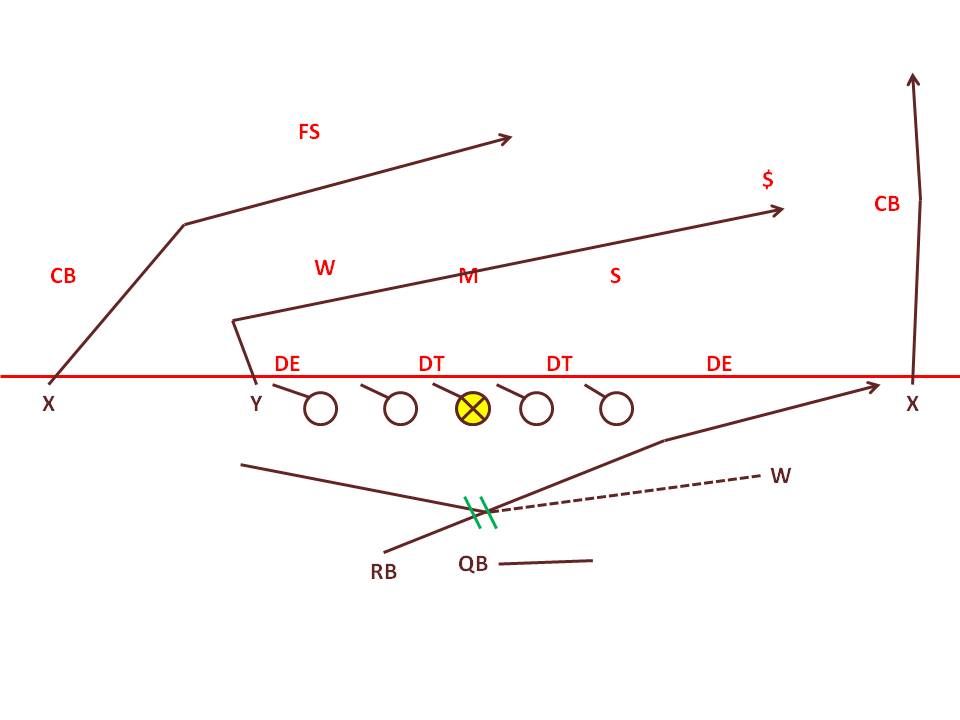
inkjet cleaner What is clear, Minnesota loves to dive. To hit the edge a little faster, they pushed the WR and passed the ball through the jet swing.
Overall, the locking scheme here is the same as the inner zone. The idea is that an already active WR would be too fast for the DE to stay inside and allow attackers to attack from the outside. But if Minnesota wants to attack from the side, but the DE doesn't shrink or expand (or the defense tries something like a cancer swap)
In this case, Minnesota simply blocked the front, taking RB by RB. Minnesota RBs must not only be able to hit the ball from deep, but also be good blockers, use good levers, and use the right angles to block defenders in or out, depending on their position and angle of attack.
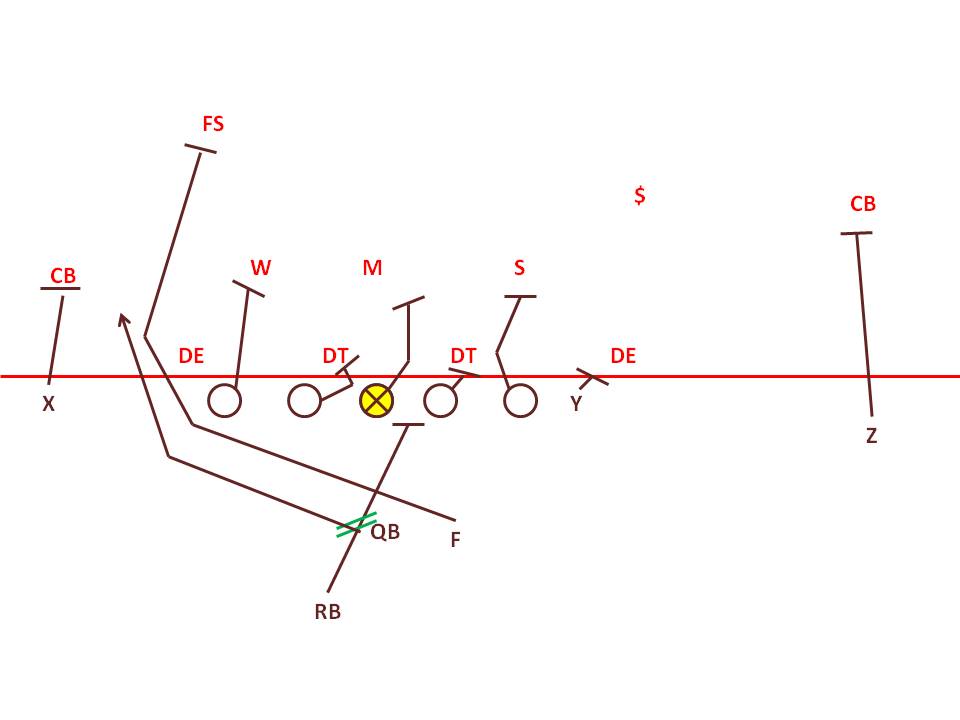
Fake rocket As we've seen above, reactive whipping is often accompanied by other play, either inner belt or counterattack. As such, a fake whip can be used to "close" the finish line at the collision line, as the defender will be instructed to hastily hold WR.
In this case, you see Minnesota leaving EMOL to block WR, and QB reading the next defender inside. These are two players that must be blocked to act, not to attack.
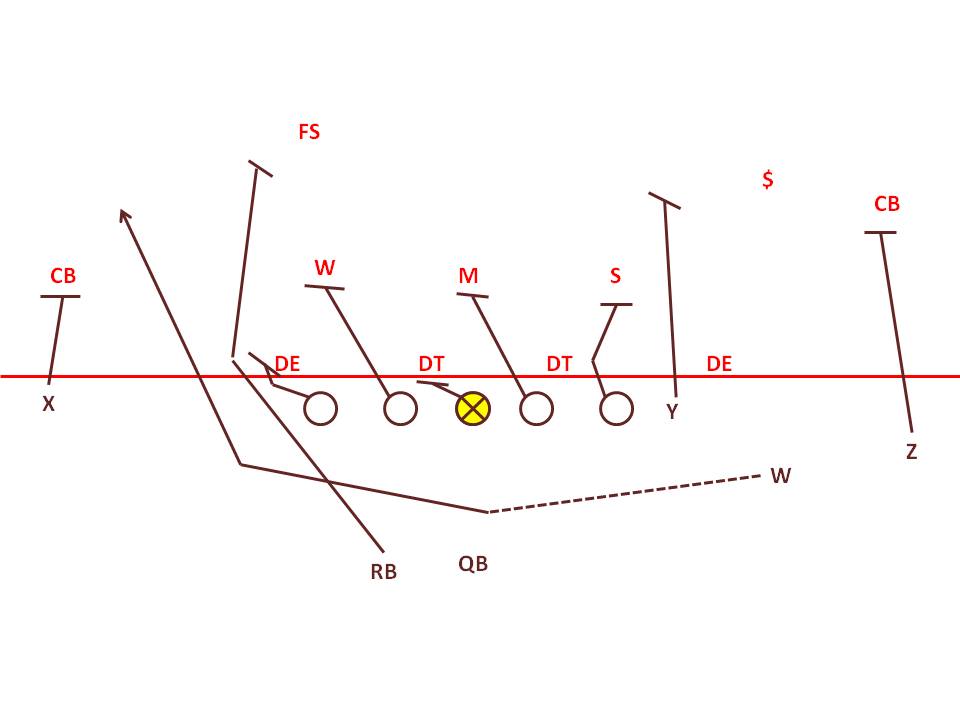
Theoretically, the same could be done to power the Power O in the form of a rotating jet engine.
Or less commonly, the theory is similar. And here is the standard power of RB with reactive action. Note that a faulty transmission to a reactive receiver acts as a blocking unit in this power connection.
And as per the main game mentioned above, Minnesota can also use reverse play. Although the blocking pattern is different (Power O is now an example, not a simple game), it has the added advantage of being WR's main blocker option.
Fake Jet Sweep Ticket: And none of this prevented Goffers from passing the ball. One of the problems many teams face is that they rely too much on running to keep the defense fair. Of course, the receiver, with the exception of the start-off, is basically out of the transfer game, but the defense must advance for two or three different dangers during the flight, they must spread horizontally on the short belt.
Open the case.
As you can see, apart from the regular PA, which would be effective for jogging outdoors, there are different routes designed to attack different starting scenes that don't result in the transfer of the WR plane to the RB. In addition to the traditional running game PA, they can concentrate defense on vertical locks, as well as turn them sideways to surprise with big air pieces.
Packing: Nothing Minnesota does is overly complex or innovative. What's this. This is a very simple theory that works together to attack the defense in the middle of the blow. There will be some breaks in this team, but it makes QB easier to read; Having lots of people on the ball keeps them all fresh, if your RB is dynamic enough to be a good universal player it will be hard to keep up the many options that the same staff always provide.
Purdue is a "concept" group; I mean they had a few dozen concepts (more or less) and built a lot of them. In many ways it is a very effective way of building high speed, high speed destruction. They combine individual concepts and your playbook can grow to hundreds, but your players only need to learn a few dozen concepts (including racing concepts). You make the game easier for everyone: OL OL and QB, and above all your QB and WR. Since what you learn is limited, you can study it in more detail, which means you'll understand the details and adjustments that can be made immediately. QB and WR get a lot of repetition by just playing a few games, and they help each other read and edit in games.
One concept I would like to explore in detail is weak flooding.
Weak side flood
According to him, one of the concepts used by Erdu is weak flooding (often called the concept of QB Naked or QB Keep). This concept provides high/low readings on the CB and loop resistance; This is also known as reading triangle. Some defenders covered the space they used when running into weak formations because they needed a strong defense to withstand the dangers of flying. In addition, this concept is often associated with fake action games; The highway from the opposite side of the field serves as a downhill TE or WR, allowing the game to adapt to this pattern.
Green square = first key Blue square = 2nd key
Street
Hoekstraat
Erdu likes to sell purchased corners. It runs at a distance of 3-5 meters from the hash, then runs vertically before returning to the corner at 10 meters. It does a few things on offense. First, it helps to sell the PA a bit (cut edges or makes it more secure), but draws attention to safety and helps define CB coverage. By attracting the attention of the gender, you will prevent him from cheating so much. They also build a uniform wall so that it passes under the receiver flat, eliminating input-to-output coverage. As for the meaning of CB coverage, when the receiver comes, the CB follows or is released. When he called, the reading was clear to QB. When released, the cube can determine whether the CB moves backwards (opens the middle and returns to the inner third) or bends (keeps feet flat forward). This will help QB as we will see in the process section.
flat cross
TE always wanted to release it unless there was a 7-tech shield. He can only work under the 2nd line of defense, but ends up having to work 5-6 meters deeper when hitting the opponent's OT. At that point, he started looking for QB for the ball. Looking back, he continued on his way to the tangent line. When the throw window opens, QB throws the TE open (either to stop it or change it to its current position).
Middle Cross
Unless there is a TE and there are no 7 technical defenders, the receiver will always be released. On the other hand, it needs to be behind a Level 2 defender and work up to 10-16 meters (as a first and level hook/curve protection). Usually, the first rod is worked at an angle of 45 degrees for the first 5-7 meters. We will return to this "remote hash" concept at the end of the article.
Growth
The first key to a move is a defender outside the receiver, usually CB. When the CB sinks (short or deep with it) with WR, the key to moving is the hook/curve shield, which is moderate risk on plate and hash on hash.
CB is falling, stay inside
CB falls, Will change
My note says hook/curly guard, which could be the LB's weak side or deep security; Change and QB should identify the touch of the second movement. A mistake that can easily get your claim rejected is failing.
CB, FS sink is cooling
On the other hand, if the CB stays flat and stays flat, the lock on the next QB move works safely, and the right corner and center cross serve as internal/external threats.
CB set, FS cut the cross
CB saved, FS succeeded
QB are very comfortable with these criteria and it is important to get the ball out of their hands. In this concept, being present at the time of tossing is the key to a coin's success. The pitch is compressed if you flood one side of the court and usually drive in that direction. This helps with reading QB, but also allows him to play fewer defenses he's allowed to respond. After the move is made, the ball must be out of bounds and the QB must read the 2nd move touch and move quickly to the 2nd move touch.
Example
Example 1
Erdu is on the pitch in a triple formation (TE and two WR on one side; WMU at 4-3 with SAM loose and showing a 2-way defence.
In a moment you'll notice that QB gives the wrong outplay when OL starts to slip. The X-WR already faces deep security at home and the Y-TE faces a cross with long range LB. You can also see that the Z-WR begins the transition by working straight inward.
QB hits the ball and starts a naked roll to the right. You can see in the next photo that the CB is driving backwards, staring at the X-WR. Immediately, that is the key to turning your gaze inward. He threw the pitch straight away without anyone noticing.
The safe and sinking CBB was dragged down the banana path, the center cross wasn't even ready to be made, and as soon as the house windows were opened, the ball was out of QB's hands.
And it leads to TD
Example 2
Same formation, Erdu just reversed as it is now in the left hash. WMU showed a slightly different formation, SS folded under 4-3 above the gap.
As the receiver begins their journey, the mesh point sees the defense. WORK up to 2 levels and hit MIKE halfway before it's released.
CB follows X-WR clearly again but with the help of security above and QB sees CB fall, he runs the 6 step half pack, looks in and waits to see the second lock and waits to open the window.
The window opens and TD.
Example 3
Now let's look at the attacker, not just the apartment. Erdu had wings on the TE and the pitch in an I formation and the edge split at the boundary (in WCO parlance: emphasis on the left green), but we played the same game.
Here's a slightly different protection plan.
The X-WR started the banana path from the inside with the rod towards the hood, the Y-TE started a flat cross after the stroke sold out and the kite started going deeper into the center cross.
CB followed the X-WR, but when QB turned his gaze inward, he saw a weak sidecar swinging sideways. Growth should lead him to the middle cross.
QB won't find it or won't find it too late (which puts it in FS to bypass the route). If he had finished reading on time, he would have hit the cross in the middle of a fine win, but he couldn't because of his delay. He finished the cover one-on-one, it wasn't a bad call, and WR created a spectacular scene for Teddy.
Same concept, different look
This is where the concept of Keep comes in handy. Since we generally have receivers in the same three places, we follow the same basic concept because outside of games and QB do the exact same reads, but different staff may do it differently. .
Example 1
Here, the tympanic membrane features near-border stacks, a wing on the pitch, and a wide hash-cracked X-WR. A lone breeder stands behind QB in the middle.
QB fades a section on the right and OL slips on the left. The underwing prevents the ED from staying there. Downfield X-WR initiates turn-off from the inner beam. To return to the stack, WR dominance is a deep direction for safety when a missing receiver makes a middle crossover (a missing WR doesn't start slightly outside the main receiver, the stack often connects an external CBN to that receiver and the stack acts as a collision due to the two switch positions receiver with axis). Finally, note that when the breeder tries to get into the apartment quickly, only six fakes will work.
That's right - it's like a TE running on a flat track. Everything else is the same. The QB reading is the same. That means it's all the same for attack, but it's a new perspective on defense. Low flank in ED is enough to sell defense. When QB followed X-WR to cover, he could see that the eye immediately moved in and PA Arby had enough time to keep OLB from sliding onto the plate. When Arby returned to Los Angeles, he was kicked out.
That's what it looks like.
And it turned into a big win.
Example 2
Purdue returns in a single back formation, with wings on the tee and border and stacks on the floor near base. SIU has three depths on the back of the top layer of support.
No play action takes place here and both teas remain closed. Breeders work the pavement, outside WRs walk around street corners, and lesser receivers run to hash the field before threatening vertically and sitting on the hash.
It can be seen in the previous photo that the CB is flat and straight when clutching the Z-WR. QB immediately noticed because the scope of support was not well defined. But that's a big part of the game's design: pushing the staple cover; The external receiver enters the internal receiver and terminates it, but it is the external receiver that runs the corner and pause paths that enter the pause path. In other words, a roadblock was created to attack from the front yard. When the X-WR arrives at break time, the QB is ready to jump in and finish reading. The CB sits firmly on the bottom line and the fuse is fixed in it, making it easier to identify the diagonal.
This is what it looks like.
And to sit under the CB is a very simple TD throw.
Example 3
Oh, but our favorite West Coast Destruction book is Spider 2 Y Banana. And you can manage this game in many ways.
How does Arbi do a cross as a flat threat (by cutting FB DE), the TE of the match as a diagonal, and the opponent's TE as the center cross.
How about an unbalanced line, FB as a flat threat, TE as a diagonal line, and the back wing as a center cross.
The thing is, you can see a lot of defense and make things easier for the QB and receiver. That means it was a design failure. Basically, the concept is as follows: the receiver runs through the player into a corner street (many coaches practice throwing it like an "alarm", watch before you continue); The receiver goes out of shape - the edge of the plane, far plane or back and moves a short distance to the side; The third receiver threatened the middle of the distance behind the flat. When combined, these three paths make the triangle QB make the same sign each time.
Michigan has delved deeper into the package against Michigan and has reached a wide FB border that will extend more than 70 meters to a neighboring TD. I want to take a closer look at this show and why it is so successful.
MSU Jet Washers:
MSU has a fairly deep action package for aircraft removal and aircraft removal as a way to attack from the side with experienced receivers being installed each week. Recently on the wheel is thrown FB. If known, I removed it in October 2014 because MSU Gaming had to add it to the cleanup package. This seems to be the case with a possible addition to this article.
A very smart coach once said to me, "If you really want to move, you have to be careful."
This is a quote I stole from Smart Football when I repeated a quote from Greg Roman, Jim Harbow's former assistant. But in modern college football, the current Michigan coach is not king in that sense because there is no team that can sell the competition to a better OL than the Michigan Spartans.
Let's make a video of some of this season's performances ...
eXAMPLES Look at RG from the outside
See how RG Power O is described.
Swing over the RG range
LG and Sweeping RG (D works well due to INT received)
All OL blocks are stretched (RB shortened for blitz protection)
Shoot everyone, AH, OT, even the center. You take a picture, they work according to the action scheme of the game Run Action Hard, and it starts with your defense schemes .
Why are OL extensions effective? There is evidence or evidence that all defense attorneys and attorneys are accustomed to responding and in many cases they must respond to provide credible defense. When OL is removed, it increases the displacement gaps along the LOS. Caregivers often have to do this in many protections. This means that the defense must respect the run, and it means that they can not break the passes so quickly. Thus, he moves, responds to defense 7 and takes his ideas beyond his scope.
It can also help protect you from the defensive line. Rollers need an edge lock to protect the QB to help the QB move. Earlier I talked about how MSU supports Power O and how triangular their DL is. The transition does not leave during the game, of course, it does not leave during the run. DL must maintain running discipline when he sees that OL is in his triangle. This prevents entry into transition zones: zones.
In this way, you improve your ability to move in the pocket, which slows down the need and changes the purpose of the need; but you also slow down the need because they need to be protected from escape. In the background, you force LB guards to respond to the risk of escape, often forcing them to go to the LOS or to the sides, instead of getting into a bird or climbing with their men. This is your ability to pull OL into your game.
Why not everyone? It's just hard. If selling a runner, OL may not be able to enter the hallway immediately, as the tractor may have enough space to pass through the lane. This puts them at the wrong angle before they reach depth. For the one who catches him, he does not immediately look at his gate, but has to go somewhere else, find his goal, hit somewhere, stop and then start defending. There should also be good traction.
So the reality is that there are a lot of moving parts, a lot of communication is needed, a lot of technology is needed to get to your country as a barrier to prevent the defense reputation. If you try to do it, it fails, it looks awful, it's very effective. Many groups do not have the equipment and do not want to spend time installing this protection scheme on their systems. But if shooting with OL is an important part of your run, it really makes your attacking transition game stronger.
Range of reactive actions: So let's go back to the way MSU connected to the Jet Action wheel trail I mentioned earlier.
MSU has taken some countermeasures this year through jet propulsion. But initially they show that OL threw a bullet block to close the edge of the aircraft broom. Many teams respond to reactive actions by moving away from defense, certainly on the line.
MSU will counter this attack with a counterattack. In something like that.
However, the Spartans are doing some work here. First, RB Power on the left, pulling RG, takes the right side of the Michigan defense. They then slide in front of the OG center to ignore the recipient of the aircraft. Block inside LG and LT and, block RT and TE and to the right by clicking on the gap that the protector can break OL (DL does not try to work vertically with all horizontal movements):
Thus, the defense responds to all horizontal threats and OL alignment side by side. To address these gaps, LB draws security and. Switching to FB is like an obstacle for other drivers, who should be respected by the defense as the main blocker, because they can leave and widen the gap. So when FB slides vertically from the place where the power line has just been cleaned, it reads defensively, responds to all the threats of a horizontal march, forgets to retreat and spreads to take full advantage of the crime.
Note: The RG load takes WILL, which must take into account the space added from the outside. MIKE is following RB. The propulsion is calculated by OC SAM. Additional space for FB installation is handled by SS. This allows the FS player to enter to clear the aircraft. It does not allow FB to register as a real recipient.
We discussed earlier how teams like Michigan and MSU blockers play . In both schemes, the keys can be reduced to take advantage of the numbers the attacker is trying to get at the point of attack. This is done by leaking from the back layer of the LB or by placing wicks in the filling. When teams are interested in shooting OLs, they start diagnosing plays faster and using attack. This is where the criminal can start working to get these keys, or use the move as a fake key. Let's see how this is resolved in the Michigan decision.
Patrick Semansky / AP
DO NOT SMOKE Let's start with a simple task not to shoot the player. It provides less than one key to protection. Now it seems simple, of course there is no zone, no iso, no main game and no key. What if you want to keep the priority of the numbers provided by the lock key but do not want to give the key? It can help to move a lot of turns here.
This is what I call Power F in Michigan. In essence, the FB serves as a shield and the H-back serves as a ejection element (note that the cells below are the same cells as during power play.
It should be noted that the LB game in this game makes a wrong move and then attacks the "blocker" with the wrong shoulder, which reveals a twist in defense. Similarly, the back of the LB is hooked rather than shaped.
Fold the block This is something that is not used criminally in modern football: a folding block. I have not actually seen Harbaugh use this tactic yet, but I want to talk about it because I like it a lot. The flexible block is used to improve the blocking angles for the OL, allowing the OL to be a leading blocker similar to the FB. If you have OL with good legs, it can be fatal. You can also use it as a Power Confrontation game.
Here, instead of attacking the "front" LB, the blocking shooter will actually try to attack the back LB and the front will be out of play. in the middle, which can sometimes be difficult for the middle when QB is below the middle, so the RB should allow play. Evolve forward to land on the slides).
This game probably works best with a very open (low) power team, as shown in the two diagrams below.
You can also use it as a "G" game with FB or RB (even if it is before)
Although not in Michigan, former Toledo coach (now Iowa coach) Matt Campbell practices a mid-level with a choice of play-by-play (both open and closed).
Affects the Whams The new scheme of modern football is the Wham block. What is not yet seen in most teams are shock traps and blows. The impact trap forces the front of the guard to overtake the outside, but locking behind will still keep players behind. Therefore, we will retain it and focus on the impact of wham.
Here you draw two OLs, one gives a forward feint, the other gives a counter-feint and lets the defense respond where the game actually happened. X-back then destroys the defender and covers one of the guards. Not only does the DL flow in the wrong direction, it tries to push through a hole for the strippers, but also the LB starts flowing in the wrong direction.
Protective cover - cut out Of course, you can always focus on reducing the RP when chasing. If the back LB goes down the coil and RB commits to play in front row before entering LOS, RB can see if there is still a ball left and cut the winning ball for a good win from behind. .
Although it is not the same, the trap game works the same way. Instead of blocking defense from behind, he blocks it from the front when he attacks.
It works to get the LB out of traps and lower areas. It is also very effective in fooling guards involved in attacks or forcing them to lose their place on the battlefield. Harbaugh has always benefited from teams trying to actively use security measures in their competitions.
And here's a good example of a guard that causes freeze guard and WR to follow (wait again).
Traction protection - Do not pull Or, of course, you can still perform the download operation. This game was completely developed by QB Keeper. Michigan's defense is overloading the striker so they still have a free kick, but he uses a bad angle as he expects RB to fall behind in the game. More importantly, look what he is doing with the ILB, it is going to deteriorate the ILB against the authorities.
Results
Michigan aims to release the blockers, which is a key aspect of their crimes. They like to have extra bodies at the point of attack. However, the defense will use these hits as a signal to pull the defenders to the point of attack. The key for them is to find a balance so that the defense can play fair. By having a standard kick (power, counter-attack, trap) on these counter-attacks, you give the defense a bit of wave and respect to run or move from behind. Power slips down, which can go a long way to success.