Showing posts with label OSU. Show all posts

Thursday, 30 June 2022

Let's Speak Technique: OSU's Chris Ash on Press Coverage


After hiring Chris Ash from Iowa, OSU essentially went from a 6 cover to a base 4 cover for printing. This change is part of a plan to increase rack loading from 7 in the front to 4 in the rear. And there's no greater push in college football than press coverage. All coaches have technical adjustments based on leverage, offensive setup, game challenge, and player skills. Post the jump, Chris Ash spoke in detail about his days at ISU on Man Press technology.
I made sure to create a powerpoint presentation screen to give you an idea before watching the video.


Please note that we start with the website. If you are in the wrong position, the next technique will be very difficult. Knowing how to start properly is important to finish properly.


Next we look at alignment. Notice that Ash teaches his DB not to align nose to nose, but squares (for WR in line; 2 for WR out). The catcher's shoulder (width) depends on the pitch (how far he is from the attacking EMOL) and support position. If you play hard in midfield and the players are wide on the outside, they can't offer much internal support, so you lose on the inside. If your receiver is aimed at a fixed line of sight and the fuse is semi-deep at the top, you can line it up in the shadow and force it back to help.


It's always important to give players ideas to build on their reactions. Without a key, we guess, and if we assume we're often wrong, we often guess ourselves, and that makes us play slowly. We want to play fast.


Please note that we start with the feet. If the legs don't do their job, it doesn't matter what technique you use with your arms. It is important to be patient, if you rush you will lose your balance and be late for the game. Try to keep the receiver in the body frame for as long as possible and spread it widely around you (inside or outside).


Then practice something


The mirror print highlights the footwork. As you watch the video, notice how DB's hands are behind her back. Concentrate on footwork and balance. The catcher's deflection causes the catcher to spread around the defender, and being able to do this with his hands in the frame will prevent the DB from jumping forward or sideways. This allowed him good footwork from the start.


However, the catcher will eventually be able to release the ball, so you need a tool (like footwork) because when that happens, it's a kicking motion. Note that you don't want to cross again, it's all about balance and explosive power. Here Ash speaks of "leading position". This means being "in sync" with the receiver, or putting your hips on the receiver's hips. Sometimes the DB needs to use tracking technology, in which case it cannot maintain its position over the receiver but can later do so. First, understand that in a leadership position, you slow down the trap (the trap can't get past you even if you both run), and you can control and feel the trap hands-free, allowing you to find the orb. and disable damage.

I'll also point out something that Ash didn't specifically mention, but how to make the move. This refers to not opening the gate, which requires a larger stride and puts the defender in a position where he doesn't have a strong stance where he transmits power with his feet (actually he's unbalanced and in such a position ). Not strong enough to hold the receiver in an awkward position). I would also add that you don't want to lengthen your stride just because you turn 45 degrees. Part of the reason you only open 45 degrees is that the receiver is still forcing it to rotate around you instead of being able to release vertically (the "lead grip"). As you increase your stride length, you lose power because your feet aren't under you and you don't have the balance or strength to keep the receiver from rotating. By holding the stand tight enough and opening it only 45 degrees, you can still control the receiver. If the receiver wants to enter your body, it must either withdraw (parallel to LOS) or penetrate you completely, which it cannot (Freeze). This allows you to maintain a position of command and control of the receiver until you can use the next technique (retreat).


When you have an advantage, a good way for the receiver to gain influence is to first stay on the outside and then come back inside, or vice versa. If a catcher tries to get past a defender's body, you should be able to turn around. This allows defenders to hold their position and not interfere with each other. With the right movements (yes, we're still focusing on the feet, hands not involved) you can easily move in and out of closing transitions with balance and explosive power. This allows you to maintain a leadership position and still be able to control the receiver.


Now we can focus on the hands. Notice the first point: "Hands should work with their feet." Otherwise you will lose your balance and strength.


Now the focus is on a real crowd. We'll focus on leg movement first and then proper use of arms and legs during the transition. The final step is the actual jam. Good technique (thumbs up, elbows locked) builds strength like any other pose.


Once the basics are done, you can focus on specific scenarios like indoor and outdoor releases....


and a specific path (the video goes through most tree paths).

Now to the video:

Wednesday, 29 June 2022

Football Fundamentals: Cover 4 Front Seven Leverage


We previously talked about Cover 4's various coverages, which allow defenses to change their appearance and how they respond to the trajectory while playing, which is basically the same as the original. This time around, I'll take a step back from what happened after the snap and see how the defense can benefit from a pre-snap pose. They are: leverage and depth. This allows you to fend off some of the attacker's strengths while maintaining your archetype. This article focuses on the seven forward positions and what they can do to take advantage of the hedging program.


line of defense
I won't go into details here as this has already been discussed . The point here is that you can play around with some techniques, especially with your DL, to help your LB adjust its leverage. Let's focus on the clock and cage modifications that drive the ED rather than the abusive EMOL.


In each of these cases, he put DE in it so that it could penetrate the space within the EMOL more easily. This is useful for the following reasons:

  1. However, given the location of the OLB, ED is likely to be responsible for the gap; If you push it, it will get there faster and without giving the barrier a chance to close it. It also puts OLB in a better position to fulfill its fitness and scope responsibilities.
  2. Identifies offensive player shots, making it easier for defensive players to read running/passing conflicts. When the EMOL is free, the OLB knows that it is progressing to bind the edge. When the TE falls vertically, they know how to run their coverage sequence (depending on whether TE is #2 or #1), when the EMOL stops, the OLB knows it's running on their outer shoulders. Basically, it looks simple: touch the outer shoulder EMOL for a race fit.
  3. It is very difficult for EMOL to create second level screens and therefore run/pass conflicts are hard to sell in play because the ED is oriented upwards and inwardly sloped. Which makes it difficult for EMOL to obtain an internal copy.

The drawback here is that overtime or TE has clean throws against the OLB which means the LB has to be strong at the point of attack and not hold back. In this case, you must rely on your DE to stay focused on your target and as an OLB stabilizer, scratch the game from the inside out.
Let's see how it works

backside
We'll look at five OLB positions that can play defense: Inside, Stack, Loose, Top, and Split. The interior is aligned in the defensive EMOL. Stack is stacked in EMOL. Loose has an outer color on EMOL. Apex will split the attacking EMOL and the next attacking player equally. The split is played within the split receiver shoulder, and the closer the receiver is to the configuration, the more the impact is matched to the outer shoulder.

in
From a 4-3 perspective above, the inside is the standard OLB position. He stands on top of his space and stands between him and QB with his offensive switch (usually OG). This position certainly helps the defense to deal with deep training and can be performed against pro or double formations. The key to the latter case is that security needs to understand their LB location.

Against a pair of twins, the Safety might want to play close to the LOS but more shaded on the receiver's inner shoulders. You're still reading n.2 as normal, but you should be able to accommodate fast exits because OLB won't be able to exit quickly. The degree to which you play against LOS depends on your game plan and the capabilities of the vault. The OLB can't be redirected to the bottom, so it's likely just a man-to-man cover on the outside. If security isn't great, you might want to play around a bit and move it around depending on how your LOS receiver looks. However, he blames himself for more running/passing disputes at other LB sites because security knows his eye has to be on a number. 2 in the whole game (and can't get into it that often). in the backcourt) and the OLB knows to run first and doesn't have to worry too much about getting out fast until the ball is thrown.

The main benefit of such a spread is that it makes it extremely difficult for attacks to cross the road, especially in shallow lands. There is a lot of clutter in the box, but OLB is in a position to clog inside easily. This allows the security to read all of the shallow interior spaces and move quickly to fill the doorway in a racing game.

Let's look at some graphs:


Note, however, that with any outing style, especially when an OLB is underway, you won't be able to go out to defend the ground. So security has to play consistently and jump quickly on whatever comes out. The security advantage here is that he doesn't rely so much on run/pass conflicts, and his eyes are always on second.


The advantage of this deep mode for WILL is that it blocks any escape route from #2. SAM in this case #2 moves to its side (when RB is less than Y-TE, it becomes RB #2 and follows SAM), but this leaves two LB to block All inner track dividers and the entire tone split into two outer sections and eliminate midline space while providing a security assist at the top.


pile
Stacks are not much different. The main advantages are twofold: it is difficult for the candidate to achieve the OLB cleanly and the OLB and DE can play gap responsibilities or even require the OLB to implement the appropriate DE depending on how it is liquidated.

It also brings the LB firing a little closer to the outside, but not too much. This gives you more chance of a flat spin compared to the standard deep poses. It can also help against the TE because it is in a head-on position at the time of the snap and it is not always possible to come out clean, especially in off-field action where the TE threatens to flatten the PA.

The stack doesn't hold transactions much differently than I would expect based on the lineup.


However, it allows the defense to play some responsible play in the gaps, forcing attackers to quickly adjust their blocking patterns on the fly.


If the SAM is stacked, it will be difficult for him to carry the Y-TE from the inside, so MIKE WILL KILL Y-TE and SAM will continue to attack the outer shoulder of the Y-TE. So when Y blocks that MIKE (eg Power-O) that automatically brings the SAM into the hole; If Y tries to exit, it corrects DE and maintains the correct gap (if DE is closed, it stays outside, if DE is open, it stays inside).

overseas
This is often associated with cage or jam technology, but not always. If so, you can check out the benefits and concerns above. But if DE is always on the outside, it has a slightly different front and bottom.


On the other hand, it can be sensitive to internal running, especially when MIKE is having a hard time filling up quickly. However, it is very effective against games and scenarios that take place abroad. Teams looking to unblock OT or TE on the spin screen or tunnel screen will now have to play slower development screen games, as these must be unblocked outside before the OLB is unblocked. This gives the OLB time to read, interact and play with the ball. Likewise, you can overload the edge and prevent attackers from picking you up and trapping you inside. They are basically forced to play fouls between tackles if they want to run the ball.


Here you can see that stick in #2 allows Will to get back into play and allows the upper security to assist.


summit
Now we go a step further and divide the difference between offensive EMOL and post-receivers. It is also often associated with cage and jam technique, but not always (particularly if the offense is committed on a larger stick, such as 11 sticks when two LBs alone can explain all the difference).


However, the main benefit of this lineup lies in the scrolling game. This puts the OLB in a position to cover the floor with a rapid overhang while still blocking any internal ventilation. Likewise, it can even allow redirection when the receiver enters the interior for the first time. Even with bubble screens and the like, an OLB can get to the point of attack faster and continue playing from the inside out without having to start from inside the box.


All external playbacks force receivers to think OLB with screens because they can force players. This allows for safety play on the inner shoulder of No. 2 Take into account the gaps outside it. This track filling technology can significantly overload the secondary and jams are difficult to bypass.


However, most of them still allow free exit from the hatch. This emphasizes the run/pass conflict where safety lies. OLB is a bit of a scrolling game, which is a nice aspect of positioning, but it adds to the run/scroll conflicts for LB. And security.

split, rip
The common attitude obviously took OLB out of the running game a bit. Having said that, security is often more involved because they have a responsibility to fill in the gap at #2 (OLB has responsibilities outside of #2). However, due to MIKE streaming, security does not need to be as responsive as other systems.


Security can also start a little in the future. Because OLB is well positioned to maintain the flat/curved plane of the field. However, it cannot be set to prevent internal versions; Each internal release must be countered by changing the path and then looking for another threat to replace the free receiver (as in case #2 blocks the internal gap or RB performs the swing path; OLB follows no internal release). This means that MIKE now has the responsibility to block cross roads, but recipients have more room to adjust their paths, allowing them to easily evade MIKE and swipe cleanly.


The biggest advantage of this is that OLB can forward any vertical path. This forces the receiver to define their intentions and puts far less security in run/pass conflicts. It also reduces routing time, giving the security more time to respond and position itself properly on recipients who will have trouble getting in and out of the break.


In addition, this mode greatly hinders the operation of the screen, especially bubble screens. The OLB is organized in such a way that it can meet the number 2 and follow it on every mission abroad. Besides, impose everything. Whereas the inner position (inside, back, and out) divides the plane in several ways, and the peak position divides the plane into three (outer end, middle end, and outer edge); Separate mode only fills the playing field, forcing objects to pass inside, and works against tight or sparse formations.


conclusion
The point here is that you can make tweaks on the frontend to help with the backend. Play OLB in stacking boxes with 7 defenders and force the attackers to pass the ball. Likewise, it reduces the running/passing conflicts that safety often encounters in Cover 4 layouts because it is known to be responsible for passing play at all times and can allow players in the box to focus more on running care. It also blocks the midfield, forcing attacks to play from flat ground.

At the other end of the spectrum, the split mode allows the OLB to prevent the release of loose slots. This slows the game down a bit and provides a safe time to read, react and make informed decisions when playing with playtime from an offensive perspective (OLBs can crash knowing they have more support). It also forces strikers to play in the middle of the field, which many modern strikers do not like. This reduces space and reduces the basic principle of violation: use field width.

Then there is the first place. Apex is basically trying to take advantage of everything. Segmentation of teams allows OLB to be part of the movement and execution. This increases the number of passes and ends the game if executed correctly. The difficulty is that more and more players are involved in play/pass conflicts, including OLB and security. But if they diagnose their keys correctly, there's nothing they can't remember.

Splitting this random formation forces attacks into a guessing game. You stack squares and the focus should be on outside play. You split the OLB and the focus should be inward again. It adapts to the higher position and the focus should be on creating run/pass conflicts. But the constant change of these positions forces the offensive line to constantly change what they want to do, and prevents them from increasing the speed or perhaps taking their favorite game from them in certain situations. It's about defense that controls what an attack can do, and if you can do it defensively, you're one step ahead of your opponent.

Let's Speak Technique: Larry Johnson DL Drills


Larry Johnson Sr. has long been recognized not only as one of B1G and one of the best scouts in the country, but also one of the best DL coaches. When he joined Penn St. in 1996. joined, he worked primarily as a DE and special team coach before making slight changes to the role of full IL coach from 2000 to 2013. PSU continued a successful IL, they failed to retain Johnson in his team with the appointment. Franklin and Larry Johnson joined the Buckeyes in 2014. Sometimes the rich get richer. Ohio State had undisputed talent on the list of disabled people in 2014, but its performance at the beginning of the year did not match its talent level. But B1G may not have a team that has improved over the years and like Johnson's defensive line in the playoffs. In this article, we will look at some of the DL exercises that Larry Johnson brought to PSU and how they make his defensive lines so effective.

We always want to start with the basics, that is, to make the technique to start the posture correct and perfect. I think it's important for players to be able to play on the ground with both hands, so you both work. Instructors will learn different standing positions depending on the floor, distance and location. The change comes from the weight of your hands (between 1/3 and 1/2) and the position of your feet relative to the base and each other. The more you are, the more you want to keep your feet under you and set off less; It is a position of energy that keeps you balanced and strong. The farther you go from the edge and the more emphasis you place on the crowd of pedestrians, the more weight you can carry forward and the more you can keep your puck in a sort of running position.

The forearm is the opposite arm of the foreleg; You want to extend it to the front so that the eyes are about 6 inches in front and just below your shoulders. Straight back with buttocks up, knees well bent to generate power. Keep your free hand relaxed and in a working position on the slam so that you can immediately clap and hit the blocker.

Then you can go to "Home". It is also a construction process. We start with a "6 point posture" (both legs, both knees and both hands down). When the ball breaks, you can shoot in front and outside. Then continue with "1 Leg Balance Start". The first three steps are the most important step for any linebacker. By starting balanced, you can get out of your position nicely and focus on that first step to the ground as you go. This tendency to focus at this early stage continues when the 1-step mat blast is low. Then start exercising your eyes and feet. The legs must be quick to respond, the eyes must find the target. So they are working on "fun exercises". These deflection exercises can go in several directions: running right, running left, drawing, fading, passing, guarding, etc.

This first video then goes to the exercise bag. These exercises improve foot movement, but they also focus on getting your feet back on the ground so you can maintain strength during a game. Your legs need to be fast because they need to be able to move To do this, you need to work forward and build strength, but if your feet do not touch the ground, your feet are small and you run out of energy.

Part II continues with the pocket exercise. These exercises will help players to play in space and understand the speed and timing of tricks, tilting and other DL movements. Continue with the parachute bag drill, which focuses on the ability to bend the buttocks during this footwork exercise. If you are deep and can move your legs well, you can position yourself well as a linebacker. All of these exercises are aimed at making these boys better athletes; Technology will help you. So now we have started in a position to achieve success and we are working on our feet to put ourselves in a position where we can be successful when the game starts.


Part III begins with mastery exercises. Tackling exercises must be done for each position. For DL, many of these tasks are close, so that should be the focus of construction. Find goals, wear your helmet and follow your coping strategies . Finally, start fast ball with QB jamming tackle tactics.

We can now focus more on the strategy so that we can start in the right position and move well enough to move to the position to apply our strategy. It starts with an explosion exercise that starts at your knees and focuses on the explosion above and below, by going a bag with both hands, driving energy into your thighs and a player. You move slowly forward to your position, starting with a position where you are basically "diving", through a two-stage bump and lever, to start your three-point position and finish your explosive strategy. These are some of the most important exercises for any DL that need to be done regularly and regularly.

Once we can break into and control a blocker, we can concentrate on dodging the blocker. The easiest way to do this in control is pool movement and tear movement. We continue to focus on "lock" drills that focus on the initial blast and extension to lock the blocker so you can control it. These exercises focus on hand use. How to hit, how to get out of the screen, how to hold and control the screen. All of this allows the defender to hold or win his man, control the blockers and then get rid of the blockers and then create drama.


And then you start combining everything from a game situation: block and row, block and break and so on. You can then work out how to handle cut blocks and how to browse online and do other tricks. But it's about the basics. Once all the basics are off the player, you can focus more on position-specific strategies (DE exercises and DT exercises). This means winning against certain blocks (expansion blocks, ram blocks, double teams, traps, etc .; how to identify specific keys,


Finally, we see fast-paced exercises that focus on rough hands, space play, diving in the shoulders, and more.

Here are more business exercises for those interested.

Inside the Playbook: Ohio State's 2-Back Offense

ORIGINAL CORN N BREW PUBLISHED 07/25/14

Ohio had some of the best crime in the country in 2013. Part of the success came back from two sets, or rather, a gesture to the receiving slot - the role of Percy Harvin - behind his back. I think they lost the best RB in college football last year, but with the return of the dynamic Braxton Miller and all of their Harvinites, it's likely that the two defenders will play an even bigger role on offense this year. In this section, we will see why it is so difficult to defend this set of defenders both before and after the click.

Slide4_medium

Dilemma before filming
The base set of Buckeyes will have four vertical threats. Often there will be 11 employees with split ends, slot, H-back and RB. Sometimes Meyer gives more than just a real view of the TE, including sides and grooves, or shows a set of movement types.

Assigning 11 or 10 employees instead of 21 or 20 represents a completely different approach to protection. Let me explain.

Of the 11 workers, four vertical threats were involved in the attack, one of which kept the horizontal threat and potential weight on one side of the field.

Slide1_medium
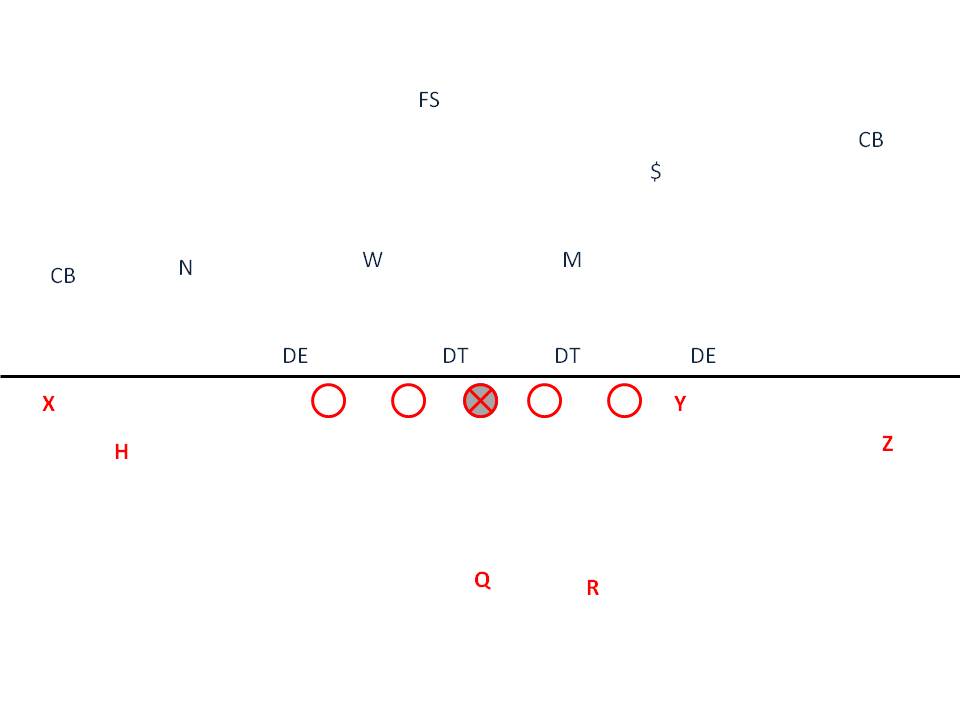
Probably, in this situation, the protection will be forced to use a nickel screen. In addition, shelter defense can be used in 3 different ways, which is very dangerous with four peaks. The defense is then forced to interact and make changes to mitigate the potential risk associated with these four vertical threats. The Nick Saban Fight Zone is a product of the three-team Cleveland Browns' surface used by the Pittsburgh Steelers' four verticals. Mattison (while in Michigan) placed his Shelter 3 right on top of a flat back (usually a "Support" lever guard or LB "Buzz"). #2 and just read #3).

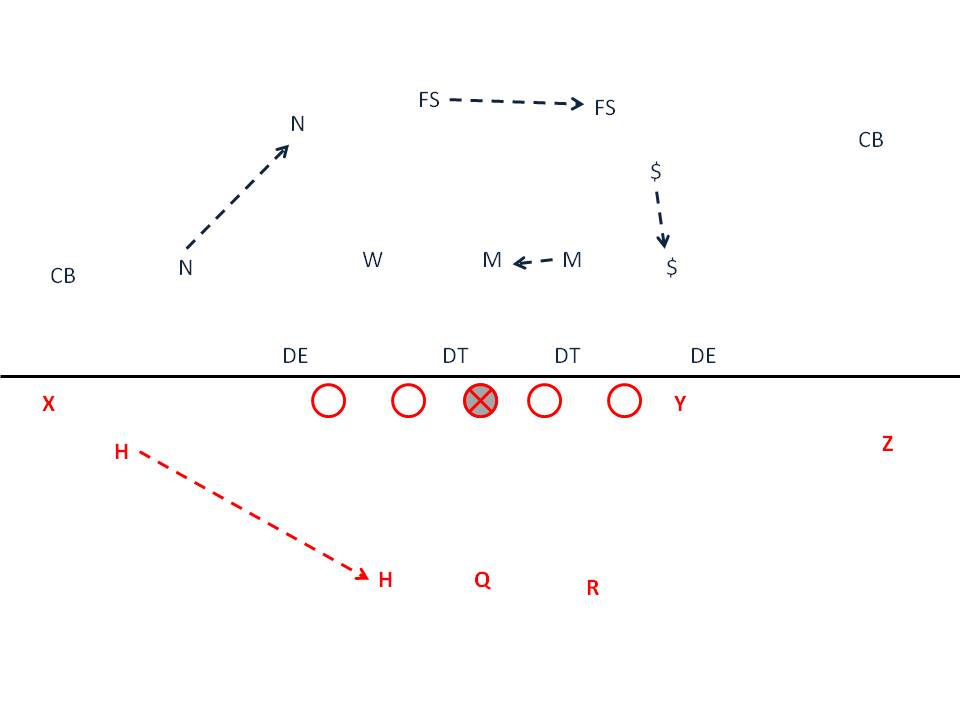
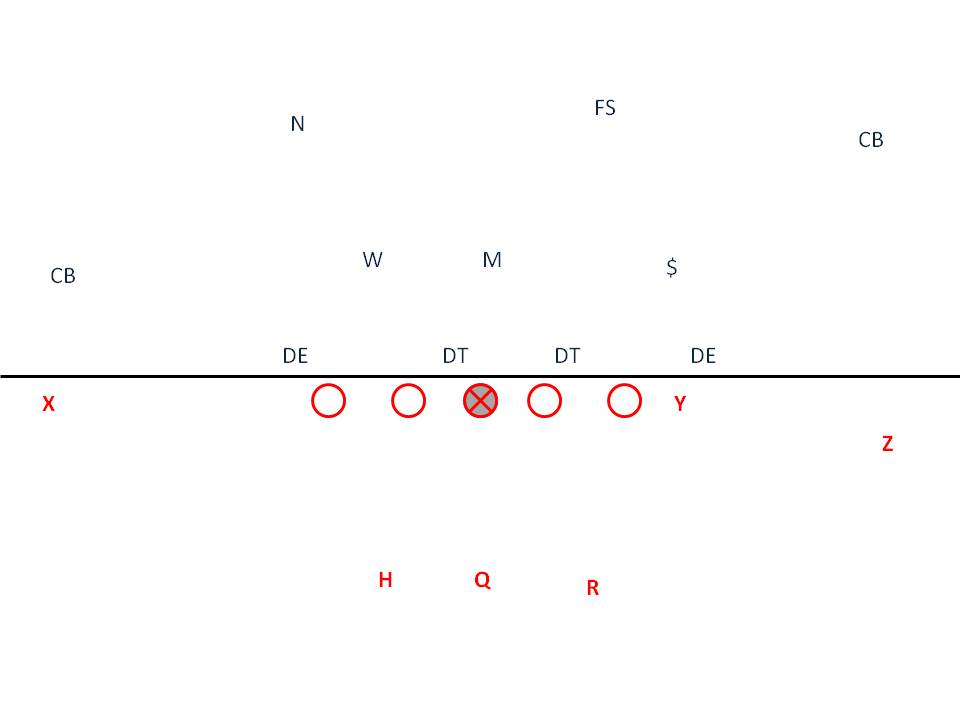
But now the slot is moving to the back row opposite QB. Your defense has made all the calls, settings and communications, and suddenly they present a completely different spectrum of threats, especially in a racing game.

Slide2_medium

Slide3_medium

Now your old gaming options and various racing situations come into play. Your cover 3 or cover 4 should now fit nicely into your new look. Maybe you change the lever to a ledge (e.g. install a 3rd cover with what I call a "5th cover", which can be a three-tier cover with a "foggy" CB lever; set a 4th cover in the middle of the cover 6- th quarter). So all the new reports and checks that you need to do quickly, and all the new threats that you need, appear immediately in a new form. But you want an employee who can embrace both and has the intelligence to quickly adapt to both.

double race
Now we will see how OSU launches several games that will be launched from the last two sets. We will briefly explain the theory behind each part and how they work together as a group, but to save this post a bit, we will keep it fairly brief.

offensive trend
Defense has a few small advantages over Buckeye doppelgangers. It is almost certain that the initial RB will go in between attacks or serve as an advantage. The motion receiver (H) is almost certainly threatening to leave. More often than not, the spins will move in the direction they crossed the QB as they move in the opposite direction of the original alignment.

Straight upside down
reading ability
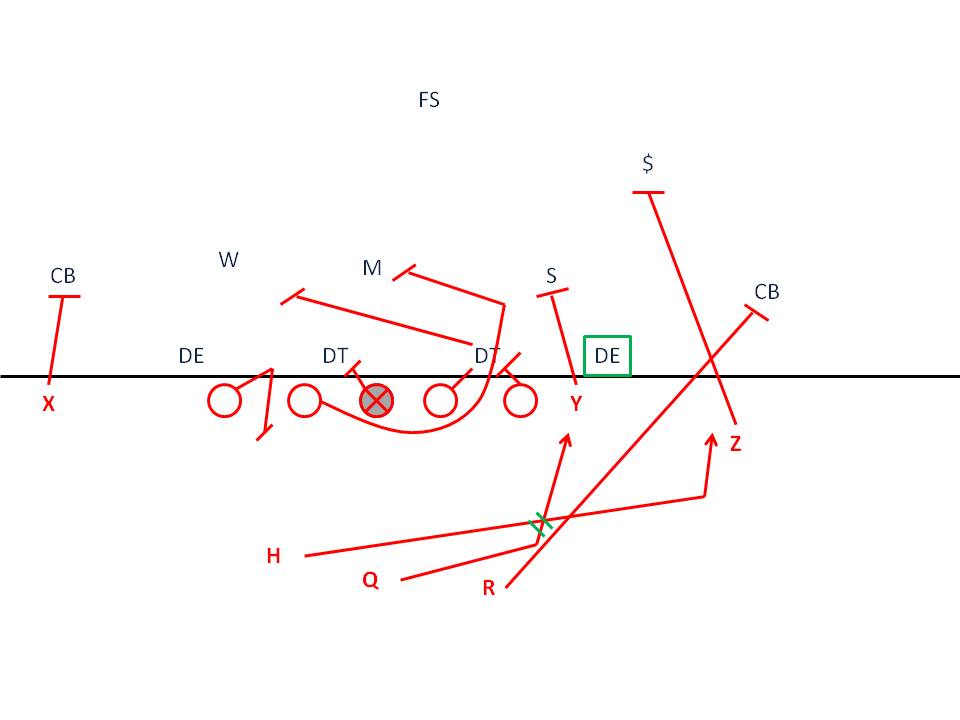
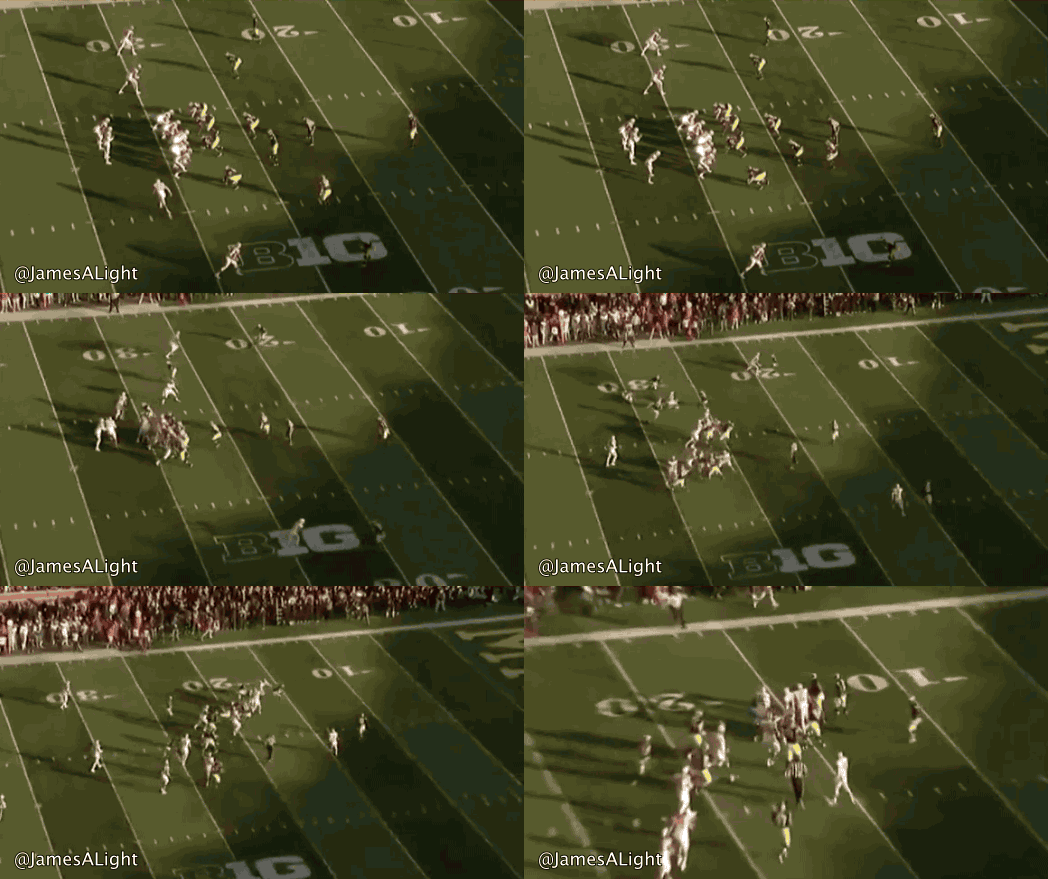
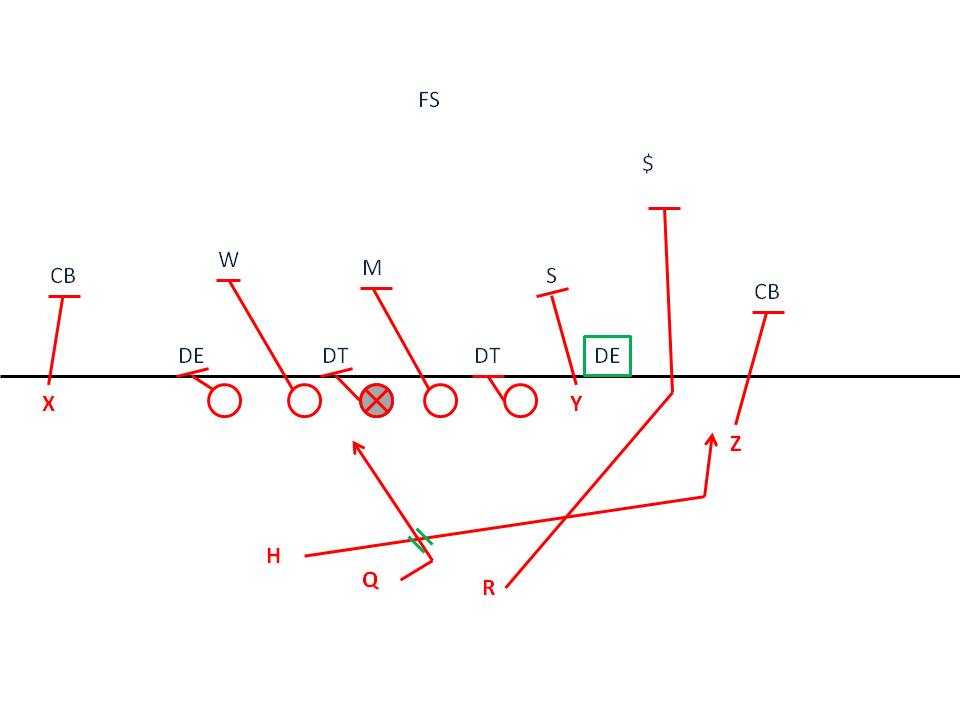
Power Read , colloquially known as Inverted veer , is an ink overlay scheme that uses a Power O block in combination with a read. I have previously worked on reverse tactics and how they work, discussed and demonstrated them in detail elsewhere.

Slide4_medium

osu-take-read_medium

QB Bash
This seems like a reverse tactic, and the main reason known as "reverse belief" is the preferred terminology. Again, H flows straight ahead of QB. However, instead of the Power Lock pattern, blocking the inside zone in the opposite direction of the H movement is used before the start of the game. Usually in the inside field, FB blocks the H-back chase, but in this case, read the blocks to read DE. RB will then avoid EMOL and attempt to block the gang's defenders in case of alienation.

Slide5_medium

Hiedjr1_media

Boy Trey
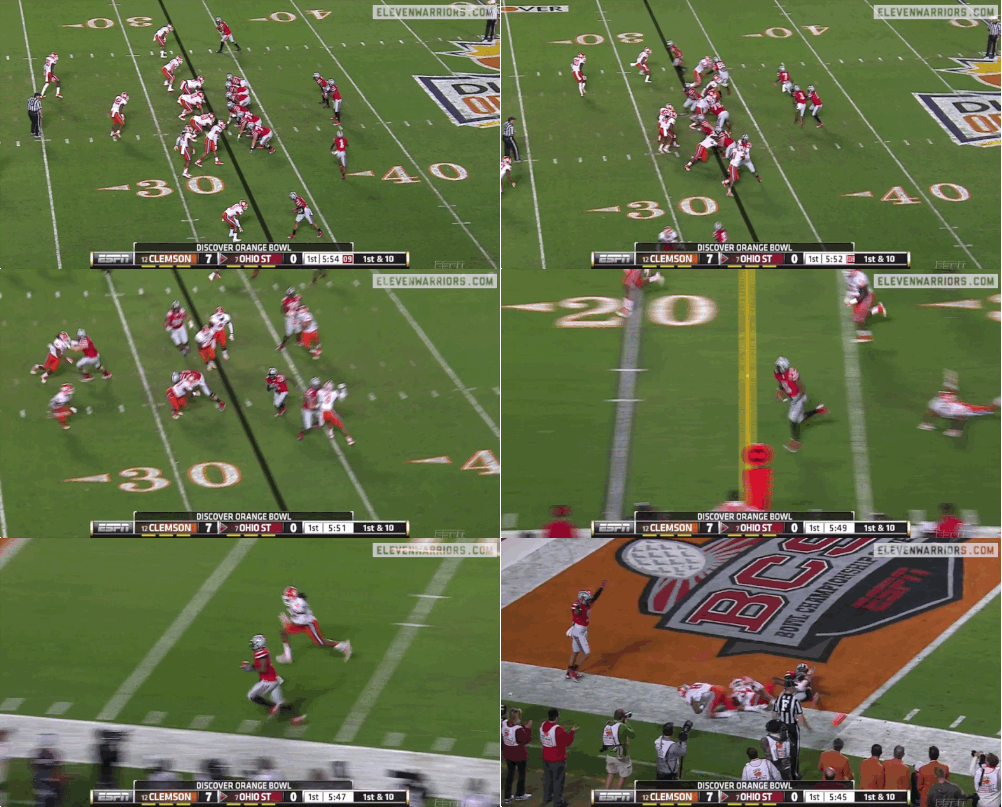
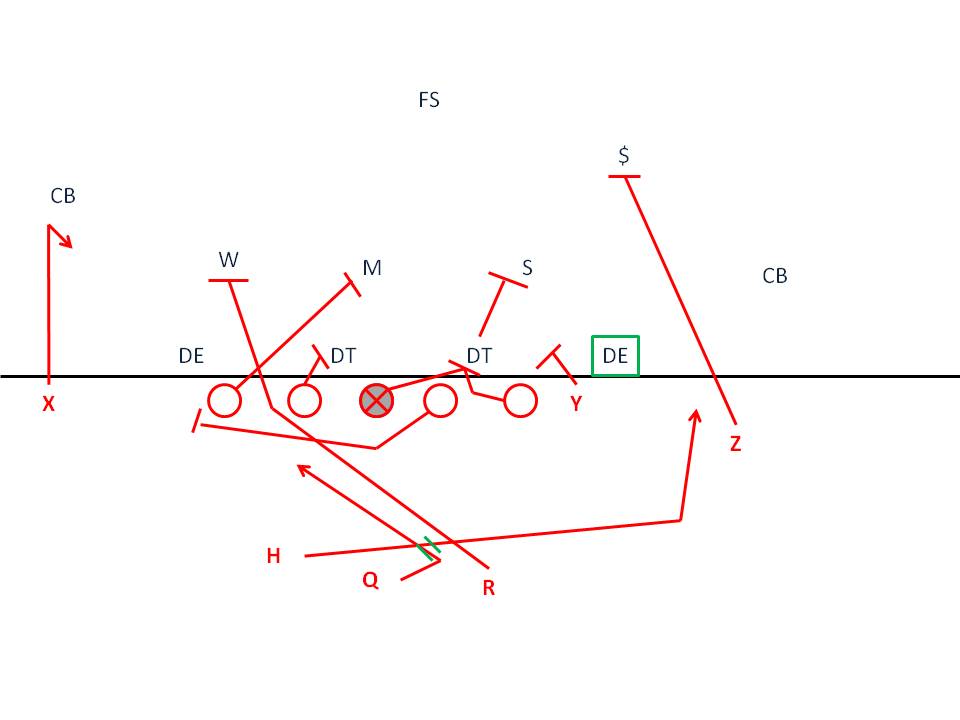
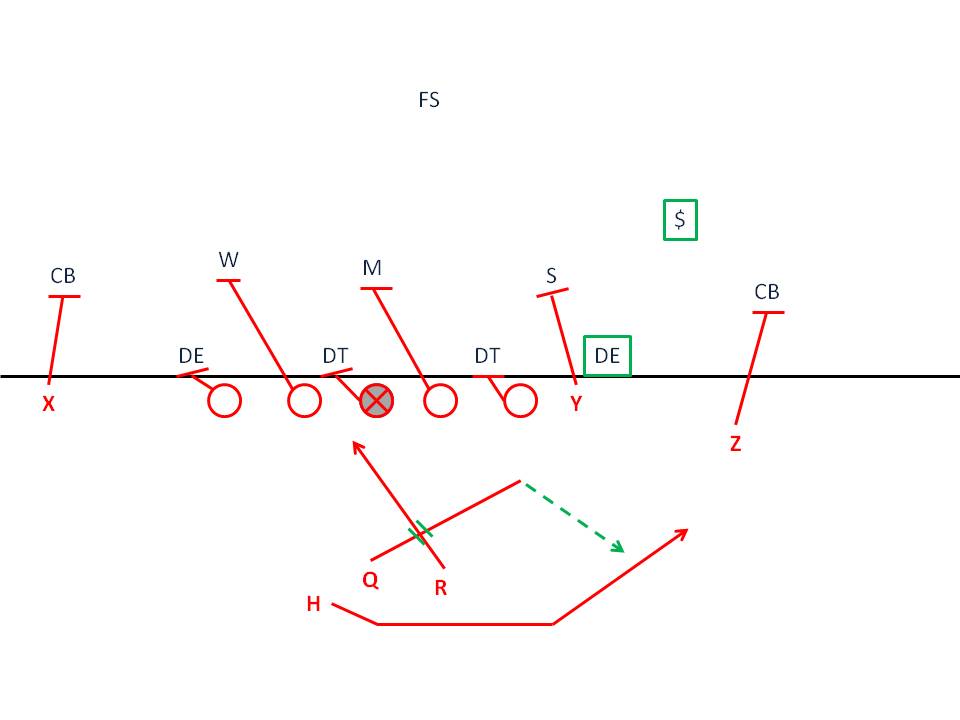
Now let's go back to the man block template, but this time we'll run the counter trey type block template . This also works with a single H-back, the same works with a double back. In this case, the H-equivalent protective cover will be pulled and corroded from the rear side of the DE. In the meantime, the RB will go through the hole and block the pull of QB if he holds on to it. In this case, QB can still read in favor of DE's game and decides to give it away if it fails in favor of DE's game. It works like this: the initial QB pass (playback slide) is followed by an H move to get the exact Power Read view after the field.

Slide6_medium

Thus, the background can look the same in three different sets of games, and in all cases, RB threatens from side to side. Meanwhile, Power Read threatens from the inside and plays with QB, QB Bas threatens from the inside and behind (with a cut on the side or outside of the game) and Counter-Gray, who is a little more dangerous on the outside (cutting a step inside). ) for the back. With these three games, any horizontal field of the field is basically threatened by two players and a blocker from above (adding a bubble screen in the background, or adding a playset with blocks - as shown in the opposite picture - can actually stretch horizontally). region).

Reading Features
We can also use RB as FB and continue to threaten the scoreboard. However, this time OSU QB will read DE (or sometimes DT) while OL uses an outer zone blocking scheme. In addition, QB allows you to threaten the background of the game. Several defenders read and added the threats, which caused problems for the defense.

Slide7_medium

triple choice
But if you have a RB like Hyde, or any other RB on the Buckeye list, it would be pointless not to use it in a racing game as well. Also, the defense reacts to something else. Also, the defense works just like any other crowbar that tries to stop the standard "reading" game. In this case, OL will block the inner zone in the original H alignment. RB will play standard inner zone playback depending on the type of reading, and QB will read DE. If DE remains, QB is returned; If DE fails, QB remains. If QB defends, he looks at the defender outside of DE and reads it. If the defender plays QB, roll to H; if the defender continues to expand, QB holds and cuts the field.

Slide8_medium

Here's a clip from OSU using a separate pad design (again blocks H-backs all over the plane).


sailing route
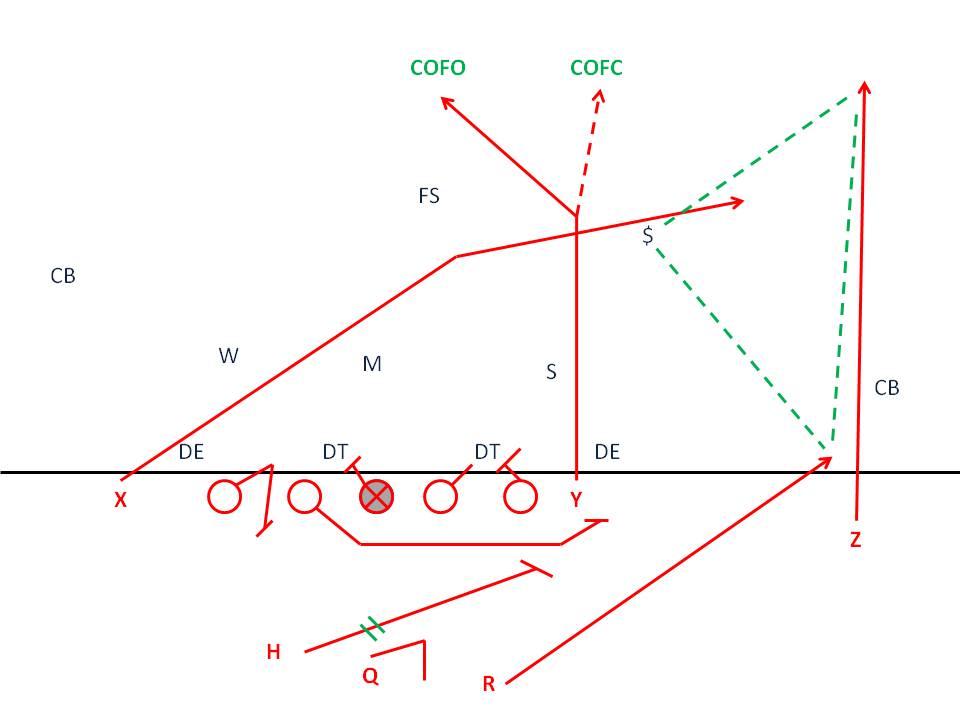
Now the guards are back to stop the race. They threaten in both directions between opposites, they threaten in both directions. Even now, as a flood concept , the screen model offers easy QB reading as it threatens any defense because it loads one side of the field. Since it has three different levels on the sides and paths that threaten the middle of the field, it can pile up multi-meter large blocks and immediately threaten the end zone.

osu_2_back_offense_medium


Conclusion
The two rear kits offer different racing games. I have already written about the use of multiple backs in running games, both standard and readable . It also threatens jet swash , which has its benefits. Adding an extra defender to the backline reduces the vertical threat and reduces some of the ability to split the field horizontally, but adding a wrinkle to the attack distribution also adds what should be a defensive factor when preparing your team. And OSU is making good use of this stronger roster, as are all other college football teams.

2022 WNBA Week 1 National TV & Streaming Schedule

Friday, May 6 19:00 - "Indiana Fever" at Washington Mystics   Facebook : Megan McPeak, Christy Winters-Scott 20:00 - Los Ange...