Showing posts with label Power O. Show all posts

Thursday, 30 June 2022

Inside the Playbook: Minnesota's Basic Run Game Attack

Originally published by Maize n Brew on May 29, 2014

Related Press:
Minnesota is one of the most popular teams not only in B1G, but in all of college football. Not only are they tough when it comes to how well they manage their football, but they are also the core of a team that wants to be strong runners. Most of their runs are between dives, like the inner belt from Power O to RB or Power O QB. With such strength on the field, there is no speed to threaten the team. So the way to take their football to the extreme is not to switch others or activate the WR screen, but to use WR in a different way to activate the whip. Not only did humiliation become commonplace to them, but they used it to make another escape. In this article, we'll take a quick look at the main Golden Gophers games and take a closer look at how they work with the rest of the gamebook.


On power:
The main form of the Golden Gophers is the traditional Power O game, but rather than being annoying, Minnesota often takes it with a shotgun or shotgun.
They will also use different versions of Power O such as One-Back Power, Two-Back Power QB Power. The blocking model is more or less the same for each of these games, the difference is usually in the background.

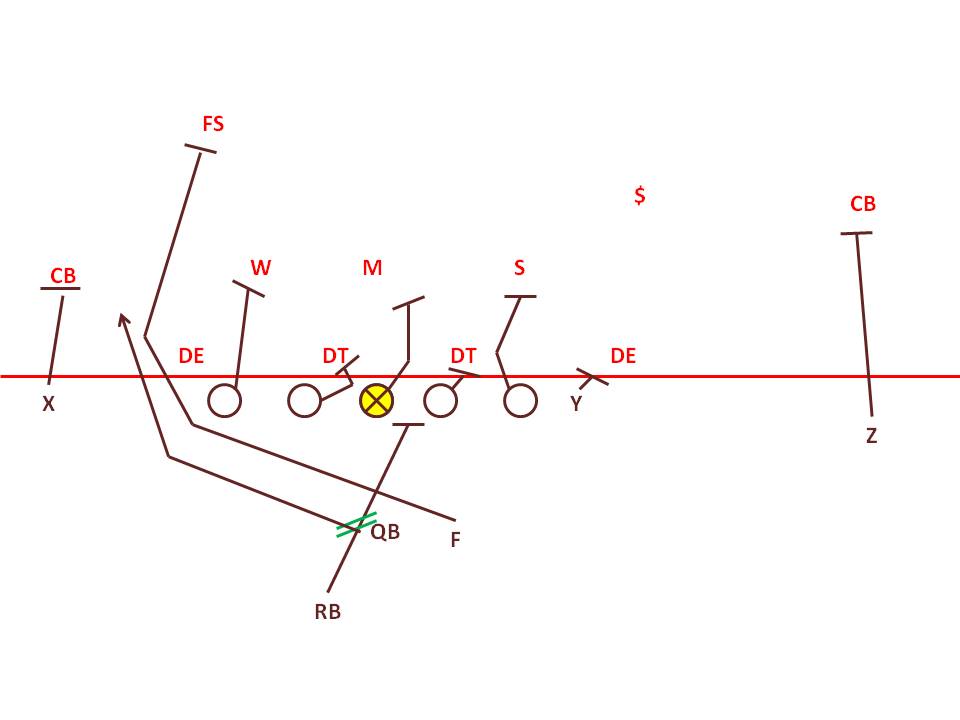
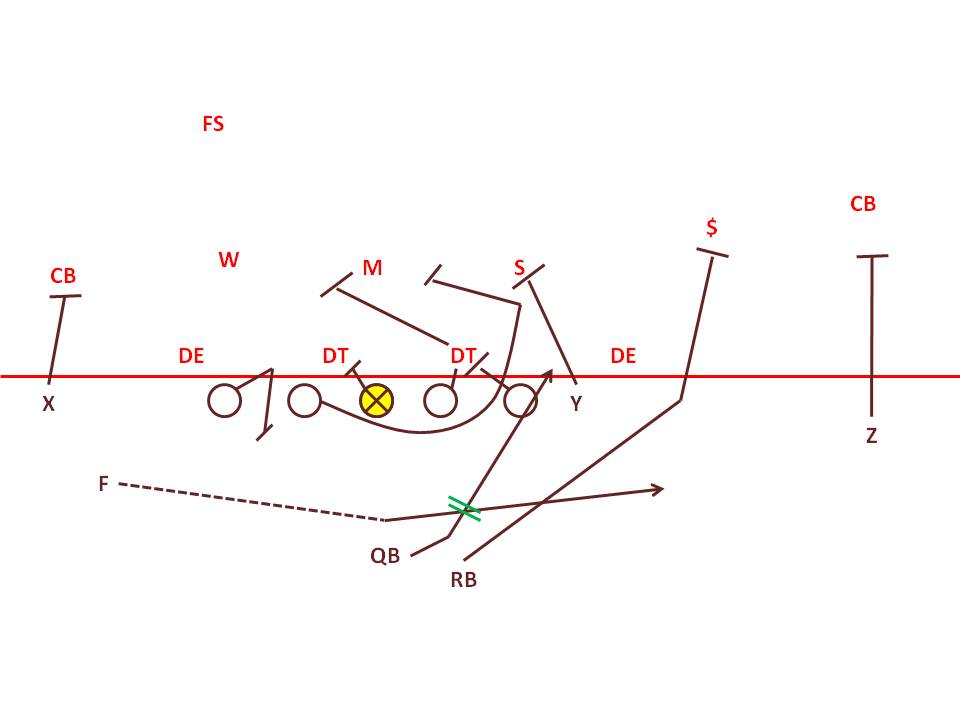
For example, there is back strength here.

Slayd1_orta:

Compared to the power of two rounds.

Slayd2_medium:

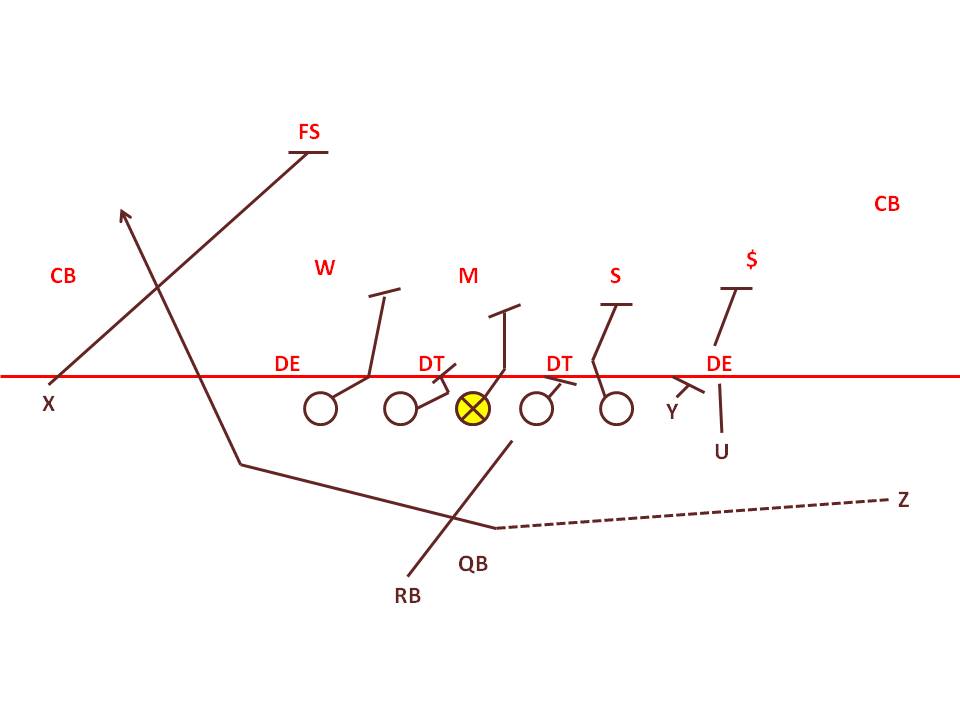
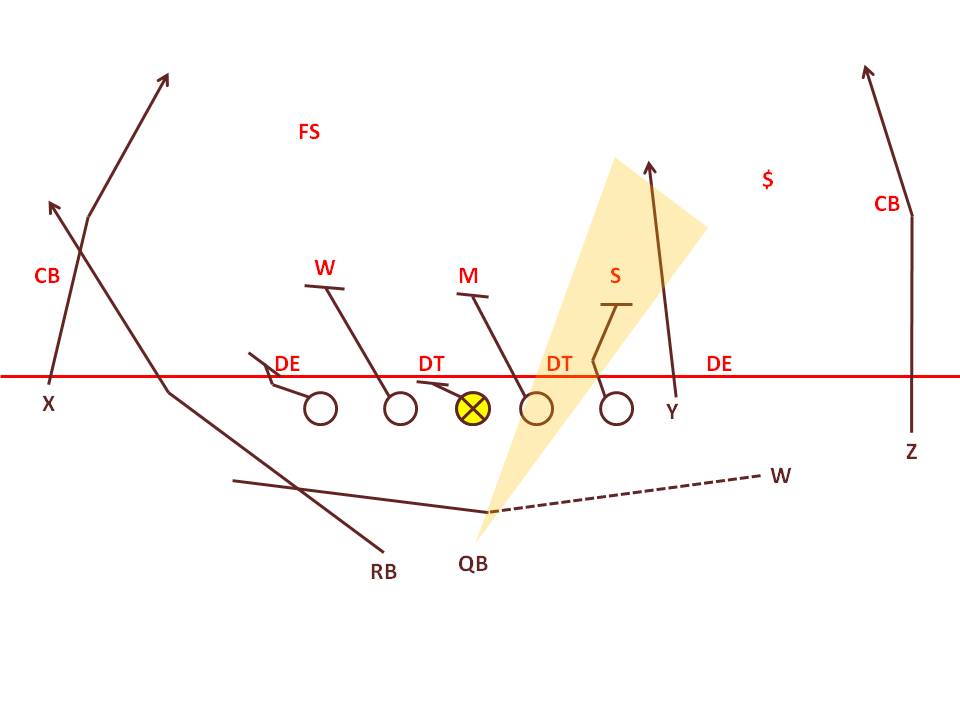
Note that the difference is that the blocking power in Power with one defender will be TE online, not RB. Now they are using the power of QB here.

Slayd3_orta:

Notice how CB does the initial calculations. This allows RB to take the lead, acting as a blocking leader, as well as allowing drawn OG to hit the hole in front of GB.

Read the inner rope
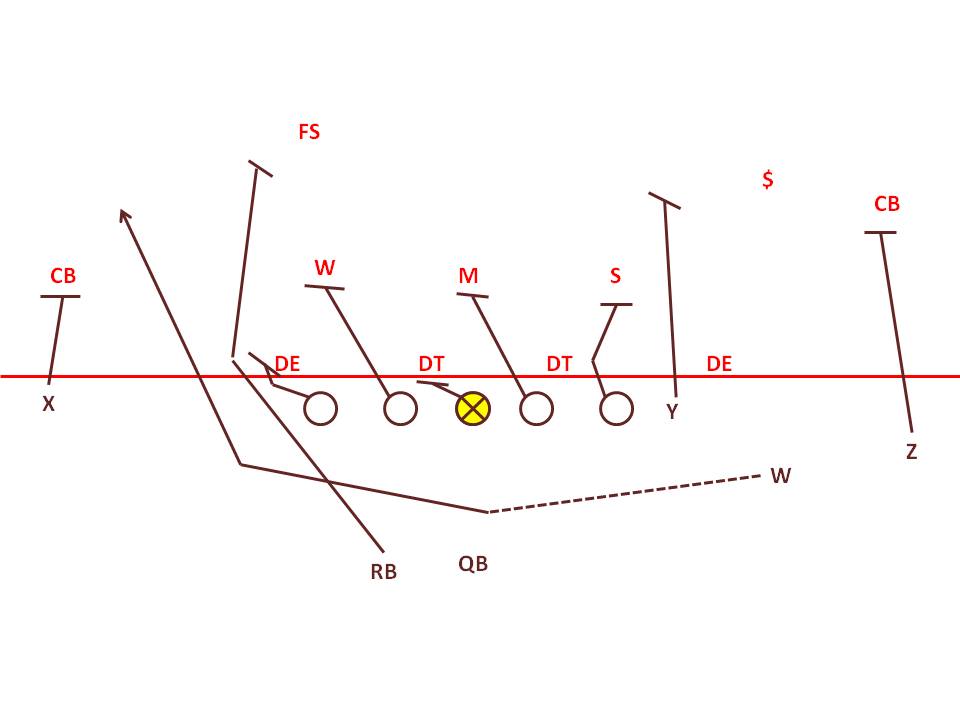
The deep zone is a key element of Gopher's attacks. It works well when combined with power, but also attacks when dropped. In this case, Minnesota usually associates it with the QB reading.
Skyfie4_medium:

One of the things that Minnesota has done for mobile QB is to run a game similar to a reading game, but instead of cutting FB, it tends to bend blocks to the second level.

Skyfie5_medium:

At first glance, it looks like an inner circle for all intents and purposes. However, to prevent the QB from escaping, the DE is taught to push the inner belt while maintaining its limits. When FB accepts the remaining angle with inclusion, it essentially closes the section with DE, which is very active inside, isolating the second tier inside the QB. This is a great way to fight DE-sent discounts and LB-sent "for DE-traders" discounts. Both players are now out of the game, which is why Minnesota was so successful last year.

inkjet cleaner
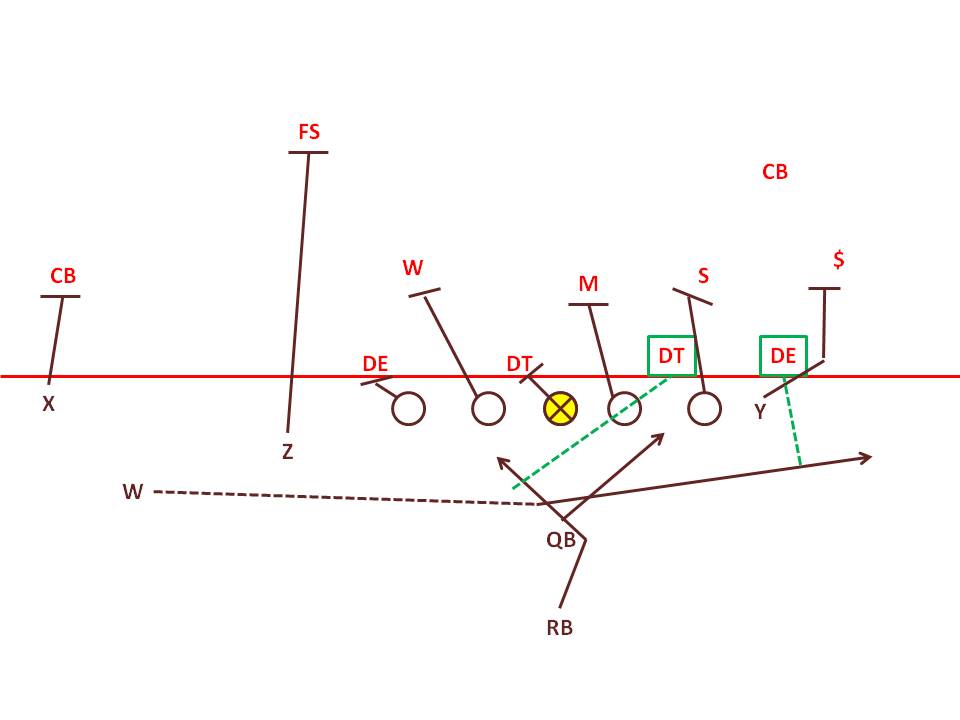
What is clear, Minnesota loves to dive. To hit the edge a little faster, they pushed the WR and passed the ball through the jet swing.

Skyfie6_medium:

Overall, the locking scheme here is the same as the inner zone. The idea is that an already active WR would be too fast for the DE to stay inside and allow attackers to attack from the outside. But if Minnesota wants to attack from the side, but the DE doesn't shrink or expand (or the defense tries something like a cancer swap)

Skyfie7_medium:


In this case, Minnesota simply blocked the front, taking RB by RB. Minnesota RBs must not only be able to hit the ball from deep, but also be good blockers, use good levers, and use the right angles to block defenders in or out, depending on their position and angle of attack.

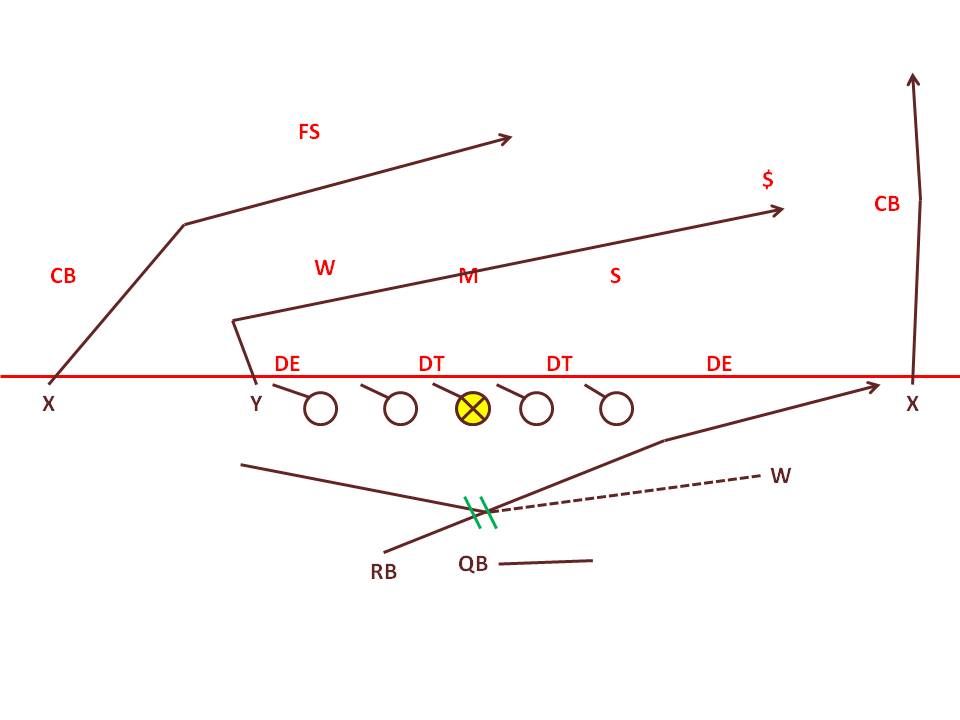
Fake rocket
As we've seen above, reactive whipping is often accompanied by other play, either inner belt or counterattack. As such, a fake whip can be used to "close" the finish line at the collision line, as the defender will be instructed to hastily hold WR.

Skyfie8_medium:


In this case, you see Minnesota leaving EMOL to block WR, and QB reading the next defender inside. These are two players that must be blocked to act, not to attack.

Theoretically, the same could be done to power the Power O in the form of a rotating jet engine.

Skyfie9_medium:


Or less commonly, the theory is similar. And here is the standard power of RB with reactive action. Note that a faulty transmission to a reactive receiver acts as a blocking unit in this power connection.


And as per the main game mentioned above, Minnesota can also use reverse play. Although the blocking pattern is different (Power O is now an example, not a simple game), it has the added advantage of being WR's main blocker option.

Fake Jet Sweep Ticket:
And none of this prevented Goffers from passing the ball. One of the problems many teams face is that they rely too much on running to keep the defense fair. Of course, the receiver, with the exception of the start-off, is basically out of the transfer game, but the defense must advance for two or three different dangers during the flight, they must spread horizontally on the short belt.

Open the case.

Minnesota_run_game_medium:


Slayd10_orta:


As you can see, apart from the regular PA, which would be effective for jogging outdoors, there are different routes designed to attack different starting scenes that don't result in the transfer of the WR plane to the RB. In addition to the traditional running game PA, they can concentrate defense on vertical locks, as well as turn them sideways to surprise with big air pieces.

Packing:
Nothing Minnesota does is overly complex or innovative. What's this. This is a very simple theory that works together to attack the defense in the middle of the blow. There will be some breaks in this team, but it makes QB easier to read; Having lots of people on the ball keeps them all fresh, if your RB is dynamic enough to be a good universal player it will be hard to keep up the many options that the same staff always provide.

Saturday, 25 June 2022

Inside the Playbook: Michigan's Use of Multiple FBs and Additional Gaps

I have already talked about space discipline , I focused on part of the article on how to drag and drop LOs into the FB mix. These things are hard to defend because they have to adapt quickly to ever-changing responsibilities. Drag OL adds spaces to the attack point, և FB can be placed anywhere along the LOS to add spaces; The protection must be adjusted after pressing these new vulnerabilities. Jim Harbo likes to use it to his advantage. Adding loopholes to the game plan makes the defense think, hesitate, and when they do, their strength-based attack can start closing yards. Also, as more and more teams focus on building attacking space (although this is starting to revert to denser people structures / gap planes as everything in football is cyclical) , the defenders are not so happy. For reliable performance (as Spielman has repeatedly said over the past few weeks).

The downside is that it provides protective "switches", especially for LBs who often learn to read from OG to FB. Usually OL pull takes you to play, և often FB takes you to play. attack, you don't want to risk pulling OL, what can you do? The answer is more twists. let's look


FB Main Blocks
Michigan will use their FB slot with a few standard horses. from the previous article
Enter FB:
Using FB as an attack will miss one of the scrolling game's vertical threats. To compensate, you can multiply your miles. From LOS, FB can be included in the game to add gaps along the LOS.

The power unit in the cast is added open from the outside next to the game. Usually a block is a percussion block; և it opens the space inside this percussion block; But sometimes the unit leans inwards, և RB can jump. The essence is the same, next to the game է it is inserted from the outside.

The ball is out of play. This usually forces the LB to steal to protect gaps. Of course, before the draw, they do not know where the place will be included.

In the case of a split area, a tear is added to the part with the tape. In this case, it will be difficult to collapse the back of the defense in the game, fill other internal gaps, as well as open the way for Belarus.
So you actually have two instances where FB defends in play, one when he leaves play և he can be placed anywhere along the LOS (obviously he can drive the block to the weak side of the circle). . This all leads to Michigan's main game.

on the power
Games like Power O (or F/H counterattack ) turn the gap into an attack point և insert an extra lock next to the game. Basically the game side adds up these two periods after pressing C և D :. The defense must of course be able to explain themselves after the shot.


These are two new gaps in the point of attack that give the ball player a very good option when he gets there.

Blog:
But removing OG is kind of a defense cue. How to reconcile the Split Zone և Iso threat, mainly using Power O? Shoot bullets.

power cord
Power Lead is the same as Power O, except instead of firing OG, you replace the pull unit with something that actually pulls FB. This “attractive Facebook” is a “bullet blocker”. Does that make sense? Ehh, let's just say I've seen better.


Note that the gap settings are exactly the same. In the game, the first FB has an effect lock, and the second goes through the C space. We are now watching it live.


Same game, different keys.

Traps և kicks
Of course, some of Harbo's favorite things are traps and hits . Again, basically the same thing, but one trap blocks DL with OL, the other with FB, և both add an extra gap, this time to the old B gap. (Note below: purple legend indicates that the space disappears because the eyebrow protrudes, leaving only one space in this area)


From the video (note that the FB input itself is where the OG push is coming from, so the B gap is preserved)


և in one fell swoop


Look at the match, FB (here, H-back) sets as a barrier trap, pushes back DT (while OG keeps typical block space).


bullet trap և punch
But what if we still want to isolate LB by blocking lead? No problem. You can always set traps, hit, always have bullet blocks. The only difference is which is the DT blocking trap.


Watch the Wham Balls video.


Traps և Strikes with external influence
Oh, but you don't take hitting people, it'll be so easy. Sometimes you might even want to influence the defense by involving line workers and intending to run with them. The "effect" here is that the defense interacts with the shooting blocker, effectively taking them out of play.

Here is the T ice cream.

Here is the standard lever trap, the defense must respond to the first T, which comes out often.


And, of course, you can do the same with a precursor.


Rear Impact Strike:
But since Power O is the main game, it's often the reverse game (remove the OG, then close the DT on the firing OG). Pull OG, watch the defense try to get to the offensive spot first, so the offensive spot is exactly where it was just released.


և video:
Jim Light
Ah, shit, affect everything
Let's get crazy, hit the t-balls, hit the trap, hit the game.


Sometimes you overestimate yourself a little, but in any case, it's a fairly normal guy who blocked the impact with a key block (TE tries to enter through the hole).

Leading force O.
But why stop by adding breaks to the point of attack? Why not two FB և microphones? Yes, the power of lead O.


While Harba will hold him (note Belarus's little countermeasure, which is done simply to give blockers time to cross), ISU holds him against Baylor.


No, it's not just a war, it just shows the strength of such a concept.

double
Michigan will close the person/gap through LOS և run dual iso:FB will separate the two ILBs. The bottom line here is that the FB must react faster than the ILB և meet them at level 2, firmly և responsibly, before the defense can respond և. It's a challenge for LB, especially if it's a sudden change from every other game I've played.


Conclusion :
The expansion of the sphere is wonderful և has advantages. Additionally, using the linear TE և H side section of the back. Everyone forces the defense to defend on both sides և vertically. But only on FB you can have different games running. FB can be placed anywhere in LOS, and using both allows you to check OL or not check OL and still use your entire game. It's a ride I've enjoyed since a long time, I like to use FB և H-Back with this egg because ultimately it makes the defense think. And when the defense thinks, և the attack hits his head, the game continues, և nothing can stop him.

Film Review: How MSU Defends Power O

The main running game in Michigan is Power O. For the past half century , MSU has specialized in stopping professional assault attacks and thus stopping Power O from running. It got to the point where Stanford during the 2014 Rose Bowl rarely tried to make a more standard game. . In this post, we want to explore what is so effective against Power O execution.


Bases for 4 MSU coverage plan
Moscow State University - 4-3 more, Cover Team 4 . The configuration looks like this.

Speaking about how LB was supposed to play, Narduzi joked about how he played. Narduzi, as well as his teammates and the LB sub-athlete, did not have time to read. Instead, he had to take the key and go to the show with speed and fury. That's the main thinking here, although LB MSU isn't what I'd call lightweight and athletic.

The seven best ISUs form a wall. The whole purpose of the defense is to play everything backwards. "Use football", "force resignation" and "trust your teammates to unite". This means that no LB should leave the game. "The worst place on the football field is behind the ball." The DL will also push and break to form a pile of bodies in midfield to make it bounce. The rebound is where the next LBs land and where security measures need to be taken.

On the contrary, it is so difficult to carry out such an attempt against the Spartans as Force O.

Triangles DL
Let's start with the defensive line, that is, the D-line keys that help them get into position to complete the game at the point of attack.

Let's start with NT. 1-Tech will read from the outer low exhaust port, back to back (FB or Single Back) to the inner far exhaust port. Anyone who falls into this triangle needs to be read.


Why do it? Well, think of it like this:

1. If the middle and far OG are blocking and pulling the near OG, you know to push back to try and close the gaps for Force O.
2. If the nearest OG and the center group block and push the far OG, you know that you will have to fight the nearest OG to try and cut off Force O's oncoming run.
3. When OG's mid and near zones are locked down, you know you're sticking to the double and keeping your distance.

And you can go on and on. He clicks on reading RB and then takes into account all the possible concepts of hits and traps, allowing his NT to connect with his A-gap.

The same philosophy will work elsewhere.

3-Tech will read the center of the near shoulder, select the near far shoulder, and back to the RB. Anyone who enters this triangle should read it.


The 5-Tech DE will read the outside shoulder from middle old to the center outside shoulder, back to the RB, which lines up behind the QB. She now has a 5-Tech visual cue in front of her. Must withstand external influences on OT. If the OT attempts to reach him, he must keep his outside hand free and secure it. If OT is blocking, he should look for players who shoot or run/hit the screens. It will print until it reads, and then any blockers that attack it. More on this later.


Now 9-Tech DE will have almost the same triangle, only it goes to TE. Count the outer arm TE to the center of the far arm and back to RB. And everyone who enters his triangle needs a key.


Here is a short video about the journey, but it explains in detail.


LB keys
LB will have its own reading triangle. They are going to read PR between them and Belarus. For two OLBs, Money (SAM) and Star (SAA) with MSU protection, they will read AG when they are in the queue or read EMOL when they are at the front of the queue. . The third point of this triangle is football (essentially QB), and this is how they determine, along with the reaction of their first two keys (OL, then RB), their run or pass. Like DL, they read everyone they meet along the way. To draw players, add spaces and you have to take this into account to see them with your own eyes.


MIKE will make similar readings but will also be able to test OG on your peripherals. Again, if someone crosses your line of sight, you must follow them to fill in the extra space.

defensive power
Now let's take each player's responsibility to protect Power O.


9 characters
Again, pay attention to the triangular DL keys, this will be important. For 9-Tech DE, read from the outermost arm of the TE to the farthest arm of the center, back to the RB. The power of O comes to him.

The first visual clue he has is a TE blocking him. Right at the moment of pressing, DE will remain at LOS level, but his eyes should look inward and look for FB or OG approaching him. Once you find the blockers that are in your way, it's your job to collect them. If a blocker approaches you, you must attack him. If two blockers come over to your side, your goal is to disable them both. To do this, you will use the purl hand technique .

However, it is clear that he must deal with the first blocker first. To do this you are going to work on the LOS, take your outside hand and pierce it through the inside arm of the FB, bring it in to prevent it from falling or going through the FB area and a bunch of bodies in general.

The goal here is to be able to fight inside the FB and then also in the OG extraction, forcing the offender to use two blockers per defender. By occupying blocks, the defense can restore the numerical advantage over the game. In the worst case, you are forcing the OG shooter to gain depth, which slows down the RB, hoping that the OG will move away from it, allowing the defense to continue and end the game.

3 characters
In this game, 3-Tech will face a double team. Both the OT (disk drive) and OG sides of the game (rear drive) will try to combine all 3 technologies and get back to the LB behind. The task of Tech 3 is to crouch and tear the outside arm up and down. Breaking through the outside arm between two blockers, he remains skinny, exposing his shoulder, in front of the blocker who tries to block him, allowing him to look down into the defensive zone. Now moving harder, the combo unit must decide if they want to keep the combo or settle for not moving at the point of attack.

If 3-Tech makes a good game, it can raise the tractor or at least increase the depth (slow down the run again or make it easier for everyone else). Worst case scenario, you need to stay alone and fight the OT unit, keeping the B space in charge and closing the C gap between your work and 9-tech work.

1 character
The NT will feel that the Center is blocking it, and will see that the OG is moving away from it. Once he sees this, he wants to stay in line with the VOC, but wants to go through the center block and leave his outside hand free.

If he struggles with a block in the post, he can return to the game, but this will increase the gap on the A side, potentially threatening the RB. By working to clear the screen, he closes the gap in the player, leaving the outside hand free to account for his A-space.

5 characters
The rear DE just clicks and bounces in play. When AG moves away from it, there is no gap B. Between him and NT they can both take place at the end of the part. This allows LB to complete the game.

Money (SAM)
Money LB Fix Tech 9. We discussed how inserting FB and extracting OG add additional security holes on the player's side. Tech 9 is trying to eliminate two players in the game in order to reduce the gaps that the defense on the player's side has to contend with. To do this, enter the block with FB feet. If there is space D outside TE, then the OG survey adds an additional space there, which we will call C2. In addition, FB hit blocking adds another gap on the player side outside of TE and outside of OG shooting, a gap we'll call D2.


With the wrong armament of the FB and the destruction of the attraction, GO Technology 9 can protect cracks C2 and D1. This leaves space D2 unoccupied. Therefore, this responsibility lies with LB money.

LB money flows through the OG side back to RB read. RB walks up to him and takes a step to read and then O.G. is about to cross his line of sight, which will give him the key he needs to attack. LB wants to move fast and straight. It will press the blade against the EMOL as hard as possible without leaving any gaps. This forces everyone back to the extra guards (oil pouring guards) and gives them leverage.

MICHAEL
MIKE will read the ball, and in his field of vision, he will see a pretty aha. At this point, you want to attack down and get to the point of attack. You want to get as close as possible to the TE to the point of attack.

Now sometimes tech 9 doesn't make a good play and chooses two blockers for one play. This is good. Let's say he raises FB. This reduces the D2 gap. The LB money will take care of the D3 gap. What remains is the space D1 and the space C, in which there are no bodies. But those gaps are filled with wrong 9-tech weapons and 3-tech gameplay. Thus, MIKE's filling will initially occupy the TE area, since he is simply trying to form a wall at the point of attack.

Star (SOL)
If the LB Star reads well, he may try to “shoot a hole” which will evacuate the throwing OG. There are only two locks in the back and getting behind OT and avoiding a shot from LB is very difficult. If you see your key right away, you can attack and track the game from behind and get TFL.

If you don't get the key right away, no problem. He will work overtime and work to fill the void in the A-side game.

what are you doing
Form a pile of bodies and a wall at the attack site. Express any gap by shaping it in a bottleneck, and never let the game develop or extra space become significant.


Resist the wrong hand
There are several ways to counter 9-Tech's wrong hand technique. First, he can make up for his FB after the game, thereby quickly pushing himself to the limit and keeping that gap large enough for the OG curve to pick up the game from the doubles team and hand over to LB, who is now forced to play head-to-head. inside fb.


Some teams go so far as to disable DE when he is fast charging because he can't handle the punch of his poor hand technique.

In addition to FB compensation, you can set up your schema to treat your FB as H-back. By that I mean that you are essentially using FB to unblock. Whether you're aligning the FB in wing position or just aiming for the DE's outer arm, flip it over and seal depending on placement and alignment. When you do this, you need to meet the DE as close to LOS as possible so that you can ride it in LOS. This allows the AG to get out of that unit by force without losing ground.


If you line up at the wing position, the added benefit is that you can also expand the DE if you use H-back and FB, FB can now find you before entering. But most of the time it will stay in the space between the fuel tank and the wing, and the center section will roll to the edge. CB is less of a threat to the success of the wrong hand.


Another thing you can try is the G lead pattern, or some kind of pin-and-pull pattern. This will give the same front view (TE and OT game blocks are down, FBs are down), but the goal is to get out as quickly as possible. So OG can be a block sealing DE inside and FB now acts as a BOSS block and goes directly to SS. Poor hand technique actually takes DE out of the game.


Or you can run G to try and get a short trap for DE before it can read the path.


Finally, you can influence Wham. I was talking about the rear NT trying to squeeze space out of the playing side A. The intruder can still pull the rear OG, he can still pull the front OG or OT. All of these traits are designed to affect defense, LB and DL. LB connect them to force O or lead G and move in that direction. DL also has an effect. An NT who is trying to increase what he thinks is gap on side A simply increases gap B. The punching block again adds gap B to the game, and an opportunity to attack becomes available.


Wednesday, 22 June 2022

Inside the Playbook - Michigan Defending the OL Pull

The Michigan attack will bring a lot of OL. Also, the Michigan defense will take more teams to the OL, which is getting longer and longer as more teams return to the men's / space lineup, keeping the team focused on their belts. Opponents of these games are arguably more dependent on power. In this article, we will look at how Michigan protects Power OK and why they support it. In the next post I will tell you how crime can react.

Earlier I discussed how MSU protects the food supply .


Power information:
I talked about Power O for a while, the ability to break the blockchain from the start , run it and read from different configurations .

But it all comes down to FB LOS with a lock, leaving the guard behind and creating an extra opening on the side of the game. It brings security.


Defender B's side gap has disappeared, but now there's an extra gap in the C և D game that the defense needs to consider. We'll see how Michigan does it.

How to get to the playground?
Here are the basic Michigan settings for most power and lock models of most games.


The center will stick to the back NT. This means that the NT is responsible for the gap between the centers. Part of the 3-Tech game: Part of the DE game is responsible for the B and C gaps, respectively. SAMD is in charge of security clearance. This means that there are two gaps left in the side of the game that LB can fill. . The extra space C created by the attraction, compared to the space A game.

Example 1:

Michigan is developing a strong eye-shape. The protection 4-3 slacks are on top, as shown above, at the edge of the SAM, above the MIKE, with a strong side opening. Red Zone is the defender to follow, and Yellow is the OL leader. Behind the red-circle defender will read his OG keys
Appearing in a wild blue box, it is safe to read to fill the path. OGIO will be the target of attraction, because all DLs in OL LOS have blocked և LB Note how fast you will redirect OG as you watch OG pull.
He makes an opening strike on the A side of the game, with which he tries to break the extended OG and starts a vertical cut towards the LOS. OL did not respond as LOS was being sued.
Cut, deepen হাতে hand blast waiting to meet safety.

Football reunion

Example 2:

The same thing applies with Michigan straight twins. Michigan has raised the LB a bit by playing close to their LOS. Note that the DE game is not too far away from you, it will start a call from OL, which will force TE to try to disable DE և FB tasks before SAM.
Again, Red Square is to follow the defender, Ozi that kicks in Yellow Square. The OL locks down anywhere in the front, when it hits the TE, starting to move through the և FB hole.

Ignore it for a second when DT dominates his man, he comes back as soon as it is not useless. Note that the defender in the red box is working to open the A side of the vine with a long oz.

OG really works security. If it weren't for the LB (և DT, winning the attack point) it would have given a great victory to the well-blocked. But LB's ass is doing his job, no one can hold him accountable.

Slice, on the back, that Arabic has nowhere to go, although the front side is very tightly closed.

Unable to read key
Here's a little out-of-place play. FB is meant to be a trap when RB և Jet Motion removes the protection of WR games.

The boys canned like before.

Quickly, the LB moves quickly vertically instead of retrieving the original key. He was caught with a fake key. This is potentially bad, as it is released at the OL LB level compared to the game and is made for 3-tech block cheat.
3-Tech does a great job of taking blocks to the second level, after which it works faster. Trap blocker can't maintain adequate level և it needs to rotate around 3 technologies, try to lock inside. LB now realizes he has to follow the trailer, but it's usually too late. However, in this game the FB has to go 3-tech before cutting the pitch. The result is about 5 meters. 3 technology games reduced the fact that FS could save 10 meters before meeting FB, or continue SAM because LB was late for his job, which he had to return to OL. : Fill in the extra space on the playground.

Consequences:
It's a very aggressive way of playing defense. It's not about working from the top down, it's about going down, but attacking from the bottom. Strong intrusions can kill any game, as an extra blocker during an attack cannot explain what is behind it. But that doesn't mean there is no answer to crime. We will discuss next.

2022 WNBA Week 1 National TV & Streaming Schedule

Friday, May 6 19:00 - "Indiana Fever" at Washington Mystics   Facebook : Megan McPeak, Christy Winters-Scott 20:00 - Los Ange...